 Holy Roman Empire (Germany)
•
1,841 views
Holy Roman Empire (Germany)
•
1,841 views
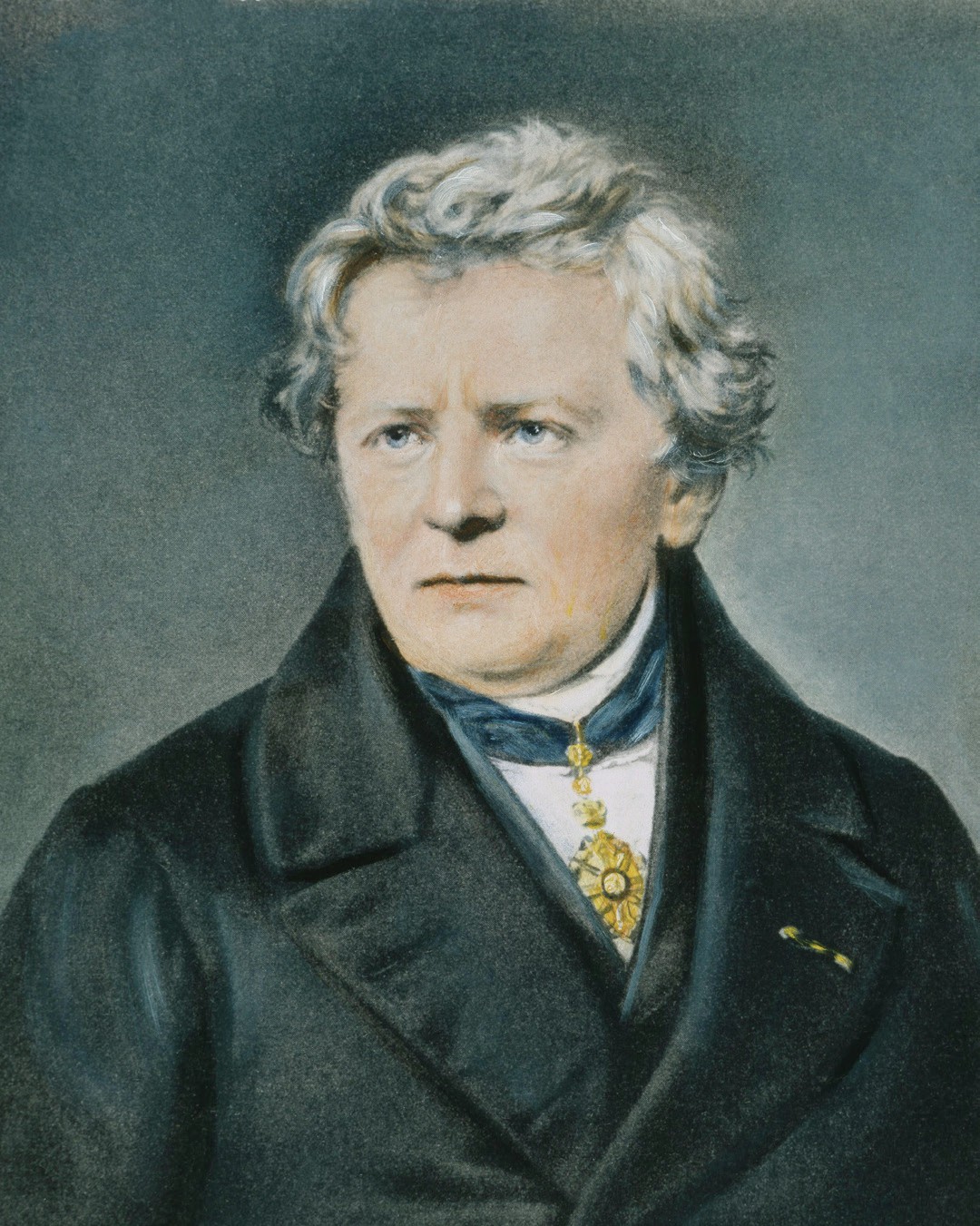
Georg Ohm

Erlangen, Bavaria, Holy Roman Empire (Germany)
Archival Overview
German physicist and mathematician who formulated Ohm's law, defining the fundamental relationship between voltage, current, and resistance.
Biographical Record
Georg Simon Ohm was a German physicist and schoolteacher whose rigorous mathematical investigations brought order to the fledgling science of electricity. Born to a locksmith in Erlangen who educated him deeply in mathematics, Ohm struggled for decades in poorly funded secondary school teaching posts while yearning for a university professorship.
Using equipment he painstakingly forged himself—including delicate thermocouples devised with Thomas Johann Seebeck to provide a stable voltage—Ohm published his 1827 masterwork, Die galvanische Kette, mathematisch bearbeitet (The Galvanic Circuit Investigated Mathematically). In it, he announced Ohm's law: that electrical current through a conductor is directly proportional to voltage and inversely proportional to resistance (V = IR). Initially mocked by German academics who regarded mathematical abstractions of electricity as 'heretical', his work was championed by the Royal Society of London in 1841 with the Copley Medal, finally earning him a chair at Munich. The SI unit of electrical resistance, the ohm (Ω), honors his perseverance.
Key Life Milestones
Publication of Ohm's Law
Published his mathematical treatise proving that current is proportional to electric potential difference across a conductor.
Copley Medal Recognition
Awarded the Copley Medal by the Royal Society of London, vindicating his lifelong electrical research after years of neglect.
Memorial Guestbook & Tributes
0 messages recordedLeave a Respectful Tribute
Final Resting Place
Perpetual MemorialMunich, Bavaria, Germany