 Italy
•
7 views
Italy
•
7 views
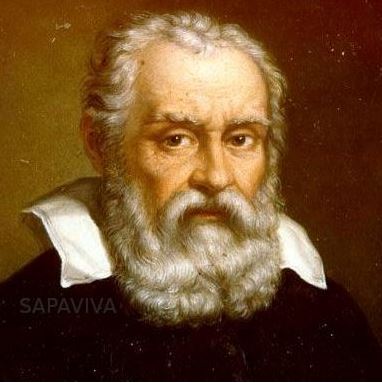
Galileo Galilei

Pisa (Tuscany), Italy
Archival Overview
'Father of Modern Science' who improved the telescope to discover Jupiter's moons, Venusian phases, and lunar craters, formulated the law of falling bodies, and defended heliocentrism.
Biographical Record
Galileo Galilei (1564–1642) served as professor of mathematics in Padua before becoming Court Philosopher to Grand Duke Cosimo II de' Medici in Florence. In 1609, hearing of a Dutch spyglass, he constructed an improved 30-power telescope and turned it toward the heavens.
His 1610 book Sidereus Nuncius (*The Starry Messenger*) electrified Europe by revealing mountains on the Moon, four moons orbiting Jupiter, sunspots, and millions of stars in the Milky Way. Following the publication of his Dialogue Concerning the Two Chief World Systems (1632), he was tried by the Roman Inquisition and sentenced to lifelong house arrest, where he authored his final physics masterpiece, Two New Sciences (1638), defining kinematics and the law of falling bodies.
Key Life Milestones
Publication of 'Sidereus Nuncius'
Announced the telescopic discovery of the four Galilean moons of Jupiter, lunar craters, and stellar clusters.
Publication of 'Discourses and Mathematical Demonstrations' (Two New Sciences)
Smuggled out to Holland, established the laws of uniform acceleration, parabolic projectile motion, and strength of materials.
Memorial Guestbook & Tributes
0 messages recordedLeave a Respectful Tribute
Final Resting Place
Perpetual MemorialFlorence, Italy