 Russia
•
7 views
Russia
•
7 views
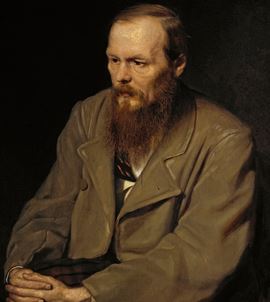
Fyodor Mikhailovich Dostoevsky

Moscow, Russia
Archival Overview
Supreme psychological novelist whose terrifying encounter with a Tsarist firing squad and Siberian labor camp forged transcendent explorations of guilt, free will, nihilism, and redemption in Crime and Punishment and The Brothers Karamazov.
Biographical Record
Fyodor Dostoevsky (1821–1881) was arrested in 1849 for belonging to the utopian socialist Petrashevsky Circle. Condemned to death, he was stood in the freezing snow facing a firing squad on Semyonov Square before a last-second reprieve from Tsar Nicholas I commuted his sentence to four years of hard labor in Siberia (*House of the Dead*) followed by compulsory military service.
Afflicted with epilepsy and pathological gambling, Dostoevsky channeled his profound spiritual ordeal into literature's deepest excavations of the human psyche. In Crime and Punishment (1866), he traced Raskolnikov's murder of an old pawnbroker and his agonizing path to redemption. In The Brothers Karamazov (1880), through the parable of the 'Grand Inquisitor', he posed the ultimate existential questions of faith, suffering, and moral freedom. Proclaimed by Nietzsche as 'the only psychologist from whom I had anything to learn', Dostoevsky reshaped the consciousness of modern humanity.
Key Life Milestones
Publication of Crime and Punishment in The Russian Messenger
Published his psychological summit following Raskolnikov's murder and moral resurrection.
Publication of The Brothers Karamazov and the Pushkin Speech
Completed his magnum opus containing The Grand Inquisitor, cementing his status as the spiritual conscience of Russia.
Memorial Guestbook & Tributes
0 messages recordedLeave a Respectful Tribute
Final Resting Place
Perpetual MemorialSaint Petersburg, Russia