 Kingdom of Prussia (Poland)
•
4,253 views
Kingdom of Prussia (Poland)
•
4,253 views
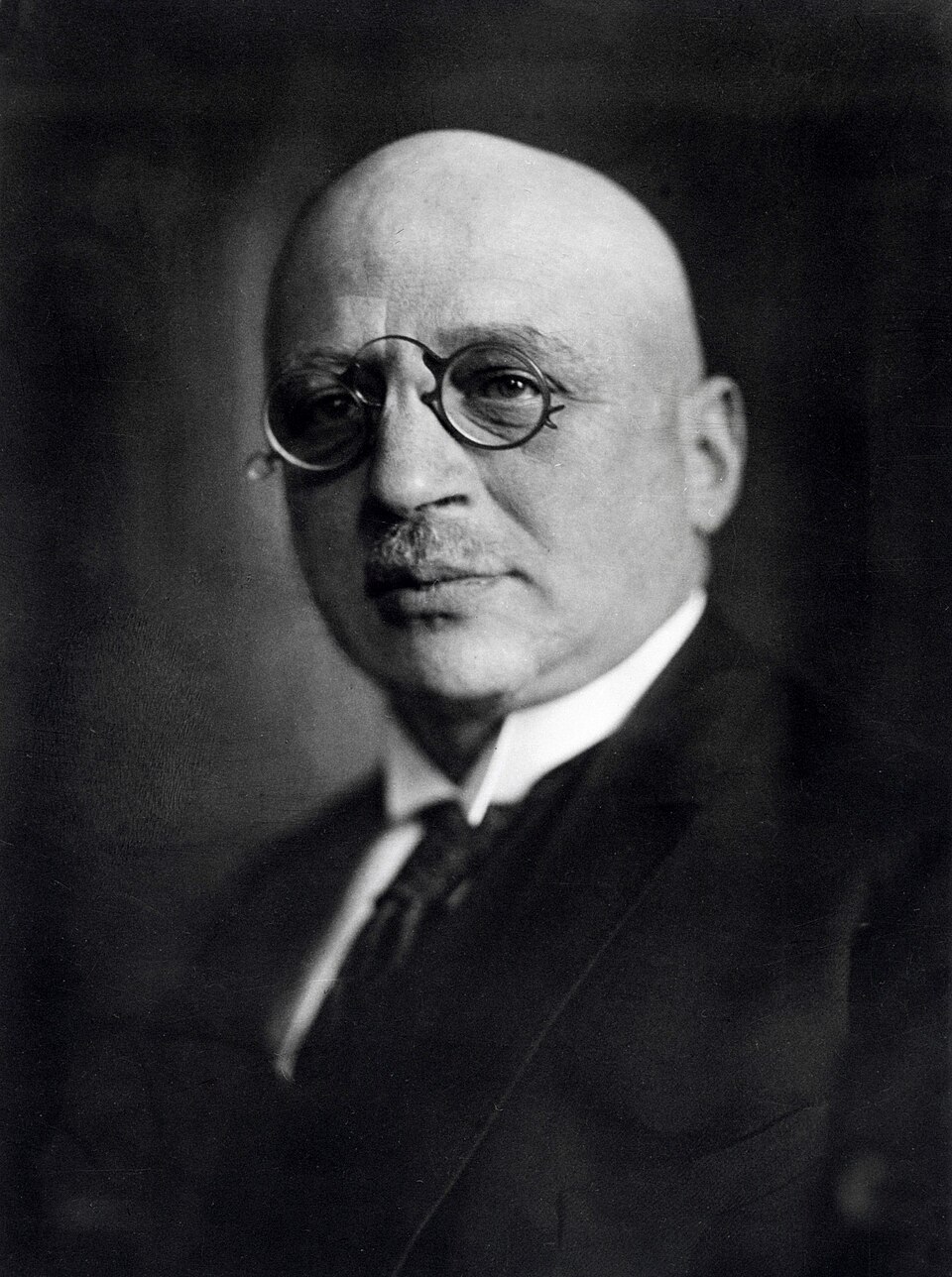
Fritz Haber

Breslau, Silesia, Kingdom of Prussia (Poland)
Archival Overview
German chemist who invented the Haber-Bosch process synthesizing ammonia from air, feeding half the modern human population.
Biographical Record
Fritz Haber was a brilliant yet deeply tragic German chemist whose discoveries represent the dual nature of science: sustaining global life while unleashing devastating death. At the University of Karlsruhe, Haber solved the supreme agricultural crisis of the twentieth century: how to synthesize nitrogen fertilizer from atmospheric air when natural Chilean guano deposits were running dry.
In 1909, Haber developed high-pressure, high-temperature catalytic synthesis to combine atmospheric nitrogen with hydrogen to produce ammonia (NH3), industrialized with chemical engineer Carl Bosch as the Haber-Bosch process. Today, over half the world's population depends on Haber-Bosch synthetic nitrogen fertilizer for their food supply, for which Haber received the 1918 Nobel Prize in Chemistry. However, driven by ardent German nationalism during World War I, Haber also directed Germany's chemical warfare program, orchestrating the first lethal chlorine gas cloud attack at Ypres in 1915. Despite his patriotic service, as an assimilated Jew Haber was persecuted by the Nazi regime in 1933 and died in exile in Switzerland.
Key Life Milestones
Invention of Ammonia Synthesis
Synthesized ammonia directly from nitrogen gas and hydrogen under high pressure using osmium catalysts, enabling mass chemical fertilizers.
Nobel Prize in Chemistry
Awarded the Nobel Prize in Chemistry for the synthesis of ammonia from its elements.
Memorial Guestbook & Tributes
0 messages recordedLeave a Respectful Tribute
Final Resting Place
Perpetual MemorialBasel, Switzerland