 Holy Roman Empire (Germany)
•
4,729 views
Holy Roman Empire (Germany)
•
4,729 views
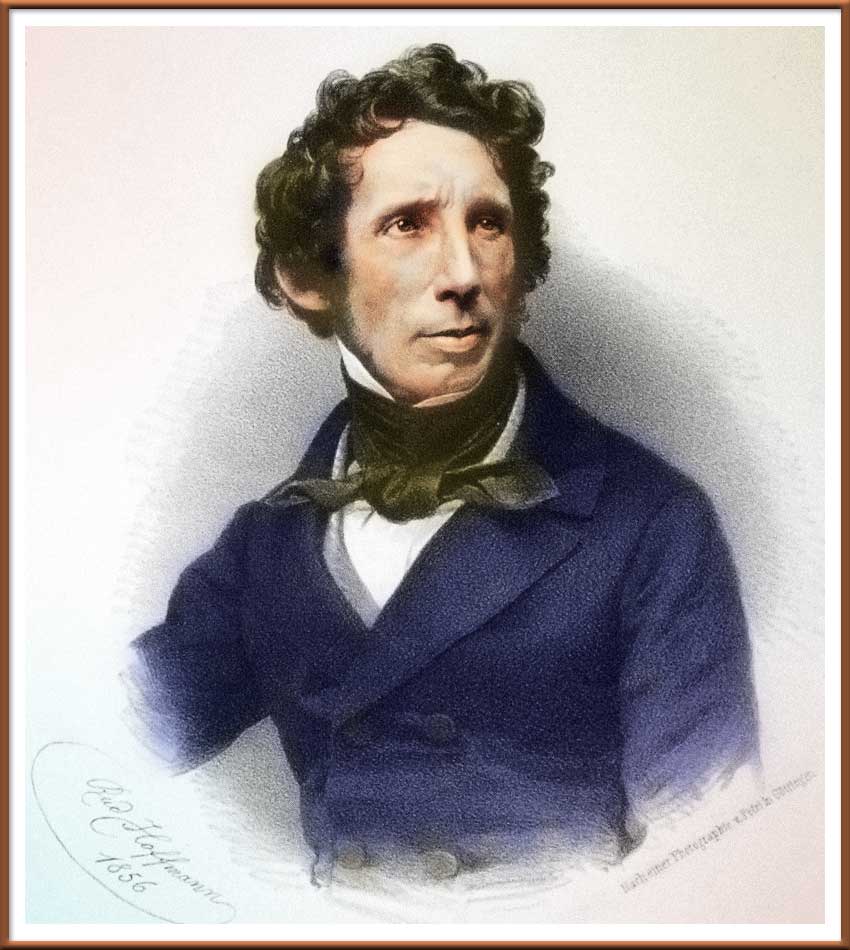
Friedrich Wöhler

Eschersheim, Frankfurt, Holy Roman Empire (Germany)
Archival Overview
German chemist whose 1828 synthesis of urea shattered vitalism and founded modern synthetic organic chemistry.
Biographical Record
Friedrich Wöhler was an eminent German chemist whose epoch-making laboratory synthesis destroyed the philosophical divide between the living and non-living worlds. After studying medicine and chemistry at Heidelberg under Leopold Gmelin, Wöhler worked in Stockholm in the laboratory of Jöns Jacob Berzelius before holding professorships at Kassel and the University of Göttingen.
In 1828, while attempting to prepare ammonium cyanate by treating silver cyanate with ammonium chloride, Wöhler obtained colorless crystalline prisms that proved to be identical to urea—an organic compound previously believed to be synthesizable solely inside living organisms by a mystical 'vital force' (vis vitalis). Wöhler enthusiastically wrote to Berzelius: 'I must tell you that I can make urea without the use of kidneys, or even an animal, be it man or dog.' This Wöhler synthesis marked the birth of organic chemistry as a synthetic laboratory science. Wöhler also isolated elemental aluminum, yttrium, beryllium, and titanium, and discovered calcium carbide.
Key Life Milestones
Isolation of Pure Aluminum
Successfully isolated metallic aluminum by reducing anhydrous aluminum chloride with potassium, pioneering light metal metallurgy.
The Wöhler Synthesis of Urea
Synthesized organic urea from inorganic ammonium cyanate, decisively dismantling the vital force doctrine.
Memorial Guestbook & Tributes
0 messages recordedLeave a Respectful Tribute
Final Resting Place
Perpetual MemorialGöttingen, Lower Saxony, Germany