 United States
•
4 views
United States
•
4 views
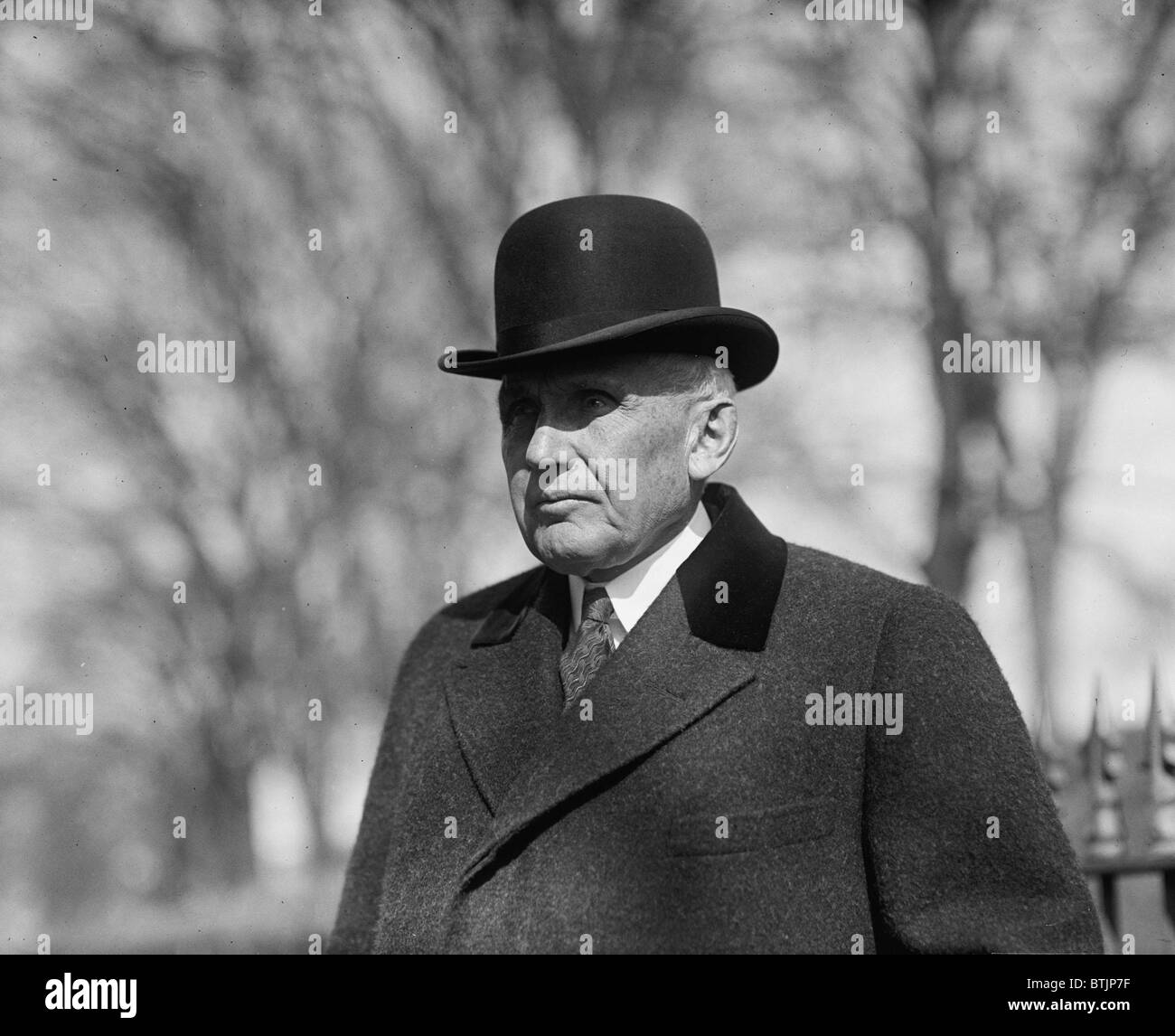
Frank Billings Kellogg

Potsdam, New York, United States
Archival Overview
Frank Billings Kellogg was an American lawyer, diplomat, and US Secretary of State (1925–1929) under President Calvin Coolidge. Working in partnership with French Foreign Minister Aristide Briand, he authored the historic 1928 Kellogg-Briand Pact (Pact of Paris), signed by sixty-two nations legally renouncing war as an instrument of national policy, for which he was awarded the 1929 Nobel Peace Prize.
Biographical Record
Frank Billings Kellogg was born in Potsdam, New York, moving with his family to a pioneer farm in Olmsted County, Minnesota, in 1865. With minimal formal schooling, Kellogg taught himself law while working as a farm laborer and errand boy, gaining admission to the Minnesota bar in 1877. Rising to become a renowned corporate litigator in Saint Paul, Kellogg was appointed special antitrust prosecutor by President Theodore Roosevelt in 1904, winning landmark Supreme Court antitrust dissolutions of the General Paper Company, the Union Pacific Railroad monopoly, and John D. Rockefeller's Standard Oil Company trust in 1911, earning the moniker 'trustbuster'.
Elected to the United States Senate from Minnesota in 1916 and later serving as US Ambassador to Great Britain, Kellogg was appointed Secretary of State by President Calvin Coolidge in March 1925. In April 1927, French Foreign Minister Aristide Briand proposed a bilateral non-aggression pact between France and the United States.
Kellogg boldly expanded Briand's proposal from a narrow bilateral pact into a universal multilateral treaty legally banning all warfare. Signed in Paris on 27 August 1928 by fifteen initial world powers—including the United States, France, Britain, Germany, Italy, and Japan—and eventually signed by sixty-two nations, the Kellogg-Briand Pact formally renounced war as an instrument of national policy. While lacking military enforcement mechanisms, the pact established the revolutionary legal foundation for 'crimes against peace' invoked at the Nuremberg and Tokyo Trials in 1945. Awarded the 1929 Nobel Peace Prize, Kellogg later served as a judge on the Permanent Court of International Justice.
Key Life Milestones
Signing of the Kellogg-Briand Pact of Paris
Signed the historic international treaty signed by 62 nations renouncing aggressive war as an instrument of national policy.
Awarded the 1929 Nobel Peace Prize
Honored retroactively in Oslo with the 1929 Nobel Peace Prize for his creation of the multilateral Pact of Paris.
Memorial Guestbook & Tributes
0 messages recordedLeave a Respectful Tribute
Final Resting Place
Perpetual MemorialWashington, D.C., United States