 Italy
•
7 views
Italy
•
7 views
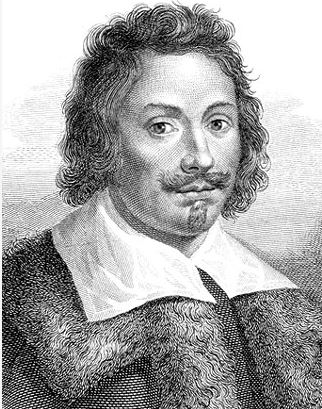
Evangelista Torricelli

Rome (or Faenza), Italy
Archival Overview
Italian physicist and disciple of Galileo who invented the mercury barometer, discovered Torricelli's Law of fluid efflux, and disproved nature's 'horror vacui' (horror of a vacuum).
Biographical Record
Evangelista Torricelli (1608–1647) studied under Benedetto Castelli in Rome and lived with the blind, elderly Galileo at Arcetri during the master's final months. Succeeding Galileo as Court Mathematician to Grand Duke Ferdinando II de' Medici, Torricelli tackled the ancient puzzle of why water suction pumps cannot lift water higher than 34 feet.
In 1643, using a glass tube sealed at one end and filled with heavy liquid mercury inverted in a dish, Torricelli invented the barometer. The mercury column consistently stood at 76 cm, leaving an empty space above: the 'Torricellian vacuum'. He famously realized that 'we live submerged at the bottom of an ocean of air'. In geometry, his infinite Gabriel's Horn (Torricelli's trumpet) had infinite surface area but finite volume.
Key Life Milestones
Invention of the Mercury Barometer
Constructed the mercury column tube demonstrating atmospheric pressure and the creation of a sustained vacuum.
Formulation of Torricelli's Law of Fluid Dynamics
Proved that the speed of liquid flowing through an orifice is proportional to the square root of fluid depth ($v = sqrt{2gh}$).
Memorial Guestbook & Tributes
0 messages recordedLeave a Respectful Tribute
Final Resting Place
Perpetual MemorialFlorence, Italy