 Greece
•
2 views
Greece
•
2 views
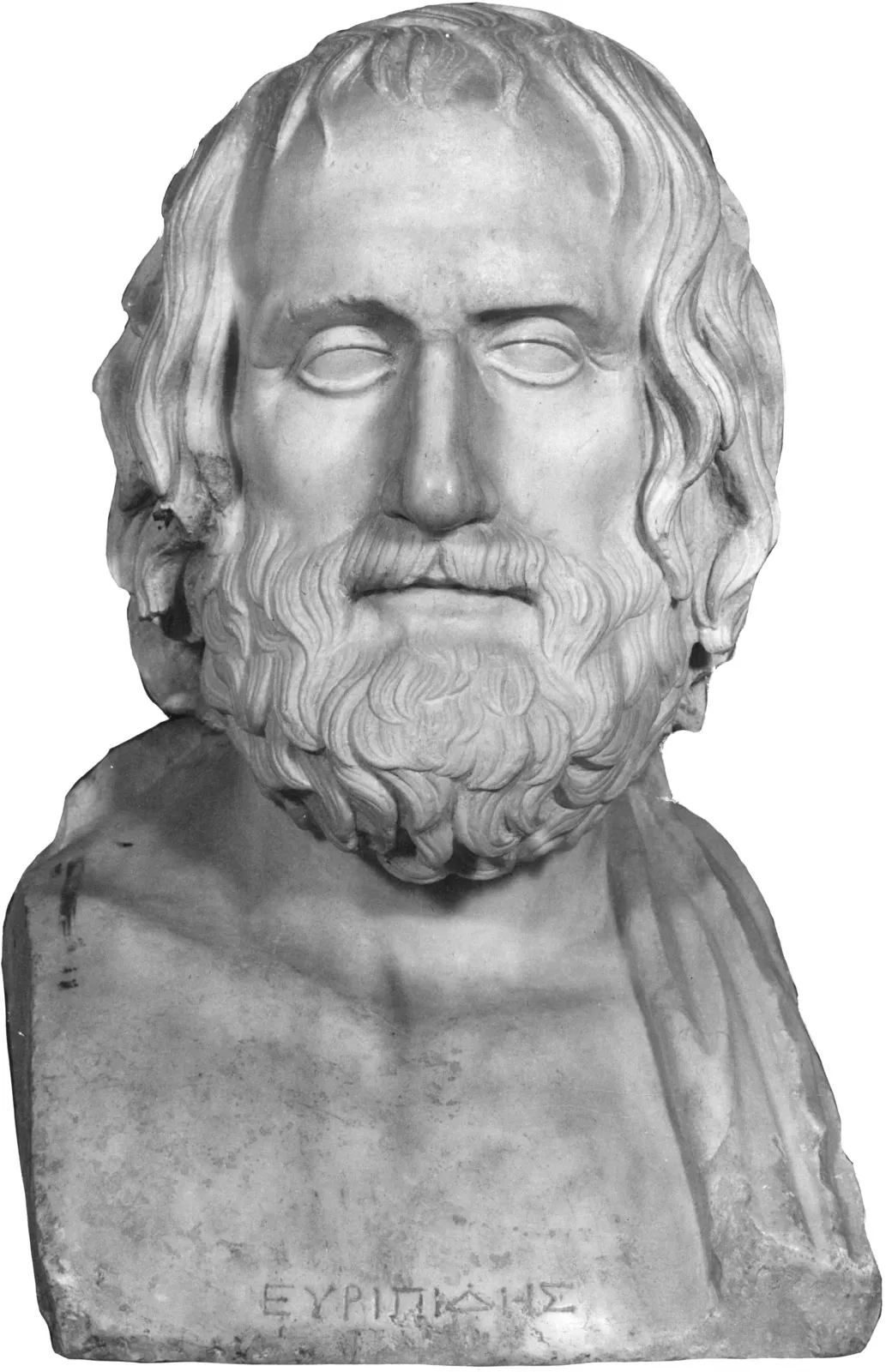
Euripides

Salamis, Greece
Archival Overview
Innovative Athenian tragedian renowned for psychological realism, sympathetic female protagonists, and scathing critiques of mythological gods in Medea, The Trojan Women, and The Bacchae.
Biographical Record
Euripides (c. 480–406 BCE) was the most modern and iconoclastic of the three great Athenian tragedians. Born on the island of Salamis, legend claims on the very day of the Persian fleet's defeat, he studied philosophy under Anaxagoras and maintained a famous private cave-library where he composed tragedies that challenged traditional mythological pieties.
Unlike his contemporaries, Euripides represented human beings not as idealized heroic archetypes but as flawed, passionate creatures driven by psychological torment and destructive impulses. In masterpieces such as Medea, Hippolytus, The Trojan Women, and The Bacchae, he explored the devastating consequences of war, gave voice to enslaved women, and exposed the moral ambiguities of gods and men alike.
Key Life Milestones
Medea Produced
Premiered Medea, shocking Athenian audiences with an uncompromising portrayal of female vengeance and betrayal.
The Bacchae Premiered
Posthumously awarded first prize for The Bacchae and Iphigenia in Aulis at the Great Dionysia in Athens.
Memorial Guestbook & Tributes
0 messages recordedLeave a Respectful Tribute
Final Resting Place
Perpetual MemorialPella, Greece