 United States
•
21 views
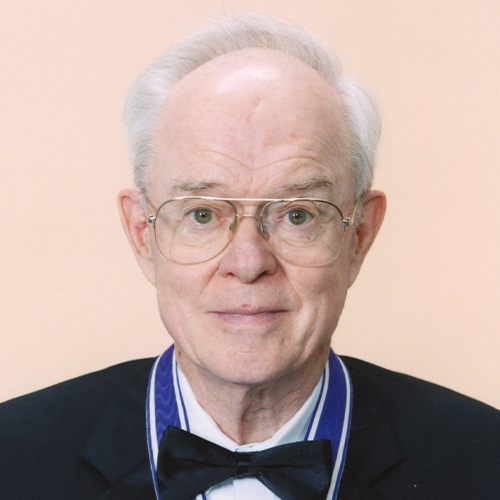
Eugene Newman Parker

Houghton, United States
Archival Overview
American solar astrophysicist who predicted the existence of the "solar wind" in 1958 and the Parker spiral magnetic field, becoming the first living person to have a NASA spacecraft named in his honor: the Parker Solar Probe.
Biographical Record
Eugene Newman Parker was born in Houghton, Michigan. He earned a bachelor's degree in physics from Michigan State University and completed his PhD at Caltech in 1951. In 1955, he joined the faculty of the University of Chicago and the Enrico Fermi Institute, where he conducted foundational plasma astrophysics research for five decades.
In 1958, using fluid dynamics, Parker formulated the radical theoretical prediction that the solar corona is not in hydrostatic equilibrium, but continuously expands outward at supersonic speeds, carrying magnetized plasma across the solar system—a phenomenon he named the "solar wind." Though initially ridiculed by peer reviewers, his prediction was confirmed in 1962 by NASA's Mariner 2 spacecraft. Parker also formulated the Parker spiral of interplanetary magnetic fields and the magnetic reconnection theory. In 2018, NASA broke precedent by naming a mission after a living scientist for the first time: the Parker Solar Probe, which flew directly into the Sun's corona in 2021. He received the Kyoto Prize and the Crafoord Prize in Astronomy.
Key Life Milestones
Prediction of the Solar Wind
Published his landmark paper Dynamics of the Interplanetary Gas and Magnetic Fields predicting the supersonic solar wind.
Launch of NASA's Parker Solar Probe
Witnessed the launch of NASA's Parker Solar Probe, the first NASA mission named in honor of a living scientist.
Memorial Guestbook & Tributes
0 messages recordedLeave a Respectful Tribute
Final Resting Place
Perpetual MemorialChicago, United States