 Austria
•
10 views
Austria
•
10 views
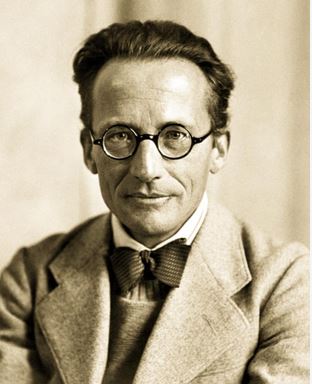
Erwin Schrödinger

Vienna, Austria
Archival Overview
Austrian Nobel laureate who created quantum wave mechanics, formulated the Schrödinger wave equation governing wavefunctions, and proposed the celebrated Schrödinger's cat thought experiment.
Biographical Record
Erwin Rudolf Josef Alexander Schrödinger (1887–1961) was born in Vienna and succeeded Max Planck at the University of Berlin. Inspired by Louis de Broglie's matter waves, Schrödinger published a historic series of four papers in 1926 formulating wave mechanics and the time-dependent Schrödinger Equation: iℏ ∂ψ/∂t = Ĥψ.
His wave equation describes how the quantum state (wavefunction ψ) of a physical system evolves over time. Schrödinger shared the 1933 Nobel Prize in Physics with Paul Dirac. In 1935, he introduced the famous 'Schrödinger's cat' thought experiment to expose the measurement paradoxes of quantum superposition. His 1944 book What is Life? inspired the discovery of DNA's genetic code.
Key Life Milestones
Derivation of the Schrödinger Wave Equation
Published 'Quantisation as an Eigenvalue Problem', introducing wave mechanics and solving the hydrogen spectrum.
Nobel Prize in Physics
Awarded the Nobel Prize jointly with Paul Dirac for the discovery of new productive forms of atomic theory.
Memorial Guestbook & Tributes
0 messages recordedLeave a Respectful Tribute
Final Resting Place
Perpetual MemorialVienna, Austria