 New Zealand
•
12 views
New Zealand
•
12 views
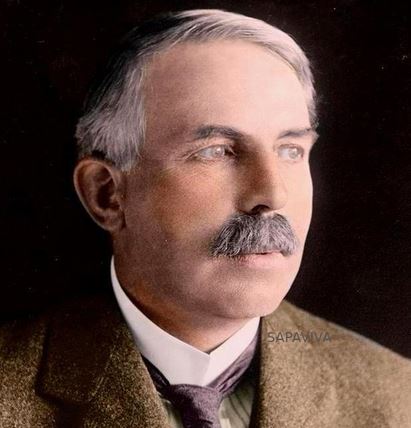
Ernest Rutherford

Brightwater (Nelson), New Zealand
Archival Overview
New Zealand-British physicist who discovered the atomic nucleus, identified alpha and beta radiation, proved radioactive transmutation, and achieved humanity's first artificial nuclear transmutation.
Biographical Record
Ernest Rutherford (1871–1937) was born in New Zealand and conducted pioneering research at McGill University, Manchester, and the Cavendish Laboratory at Cambridge. He classified radioactive emissions into alpha and beta rays and proved that radioactivity involves elemental transmutation, winning the 1908 Nobel Prize in Chemistry.
In 1911, interpreting the gold foil experiment of Geiger and Marsden, Rutherford deduced that the mass and positive charge of an atom reside in a tiny, dense core—discovering the atomic nucleus. In 1917, Rutherford achieved the first artificial nuclear transmutation by bombarding nitrogen with alpha particles, converting it to oxygen and identifying the proton. Element 104 was named rutherfordium in his honor.
Key Life Milestones
Discovery of the Atomic Nucleus
Formulated the nuclear model of the atom based on large-angle alpha particle scattering in gold foil.
First Artificial Nuclear Transmutation
Bombarded nitrogen gas with alpha particles, transmuting it to oxygen and discovering the proton.
Memorial Guestbook & Tributes
0 messages recordedLeave a Respectful Tribute
Final Resting Place
Perpetual MemorialCambridge, United Kingdom