 Italy
•
8 views
Italy
•
8 views
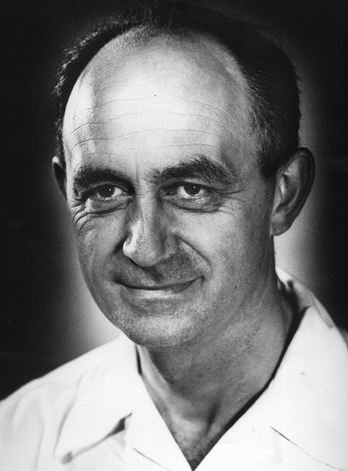
Enrico Fermi

Rome, Italy
Archival Overview
Italian-American physicist who built the world's first artificial nuclear reactor (Chicago Pile-1), formulated Fermi-Dirac statistics, discovered slow-neutron radioactivity, and led the Manhattan Project.
Biographical Record
Enrico Fermi (1901–1954) was a peerless master in both theoretical and experimental physics. At age 25, he formulated Fermi-Dirac statistics governing fermions (particles obeying the Pauli exclusion principle). In 1934, he developed the theory of beta decay and discovered that slow neutrons readily induce artificial radioactivity, earning the 1938 Nobel Prize in Physics.
Fleeing fascist Italy, Fermi emigrated to America. On 2 December 1942, beneath Stagg Field at the University of Chicago, Fermi achieved the world's first self-sustaining man-made nuclear chain reaction in Chicago Pile-1. Element 100 (fermium), the Fermi National Accelerator Laboratory (Fermilab), and fundamental fermions honor his memory.
Key Life Milestones
Nobel Prize in Physics
Awarded the Nobel Prize for demonstrations of radioactive elements produced by neutron irradiation and slow neutrons.
First Self-Sustaining Nuclear Chain Reaction (Chicago Pile-1)
Successfully initiated the world's first man-made self-sustaining nuclear chain reaction at the University of Chicago.
Memorial Guestbook & Tributes
0 messages recordedLeave a Respectful Tribute
Final Resting Place
Perpetual MemorialChicago (Illinois), United States