 German Empire (Germany)
•
2,182 views
German Empire (Germany)
•
2,182 views
Emmy Noether

Erlangen, Bavaria, German Empire (Germany)
Archival Overview
German mathematical genius who formulated Noether's theorem connecting symmetry and conservation laws, revolutionizing abstract algebra.
Biographical Record
Amalie Emmy Noether was a German mathematician described by Albert Einstein, David Hilbert, and Hermann Weyl as the most significant creative mathematical genius thus far produced since the higher education of women began. Barred from formal university admission in Bavaria because of her gender, Noether audited classes before eventually earning her doctorate at Erlangen under Paul Gordan, working for years without salary.
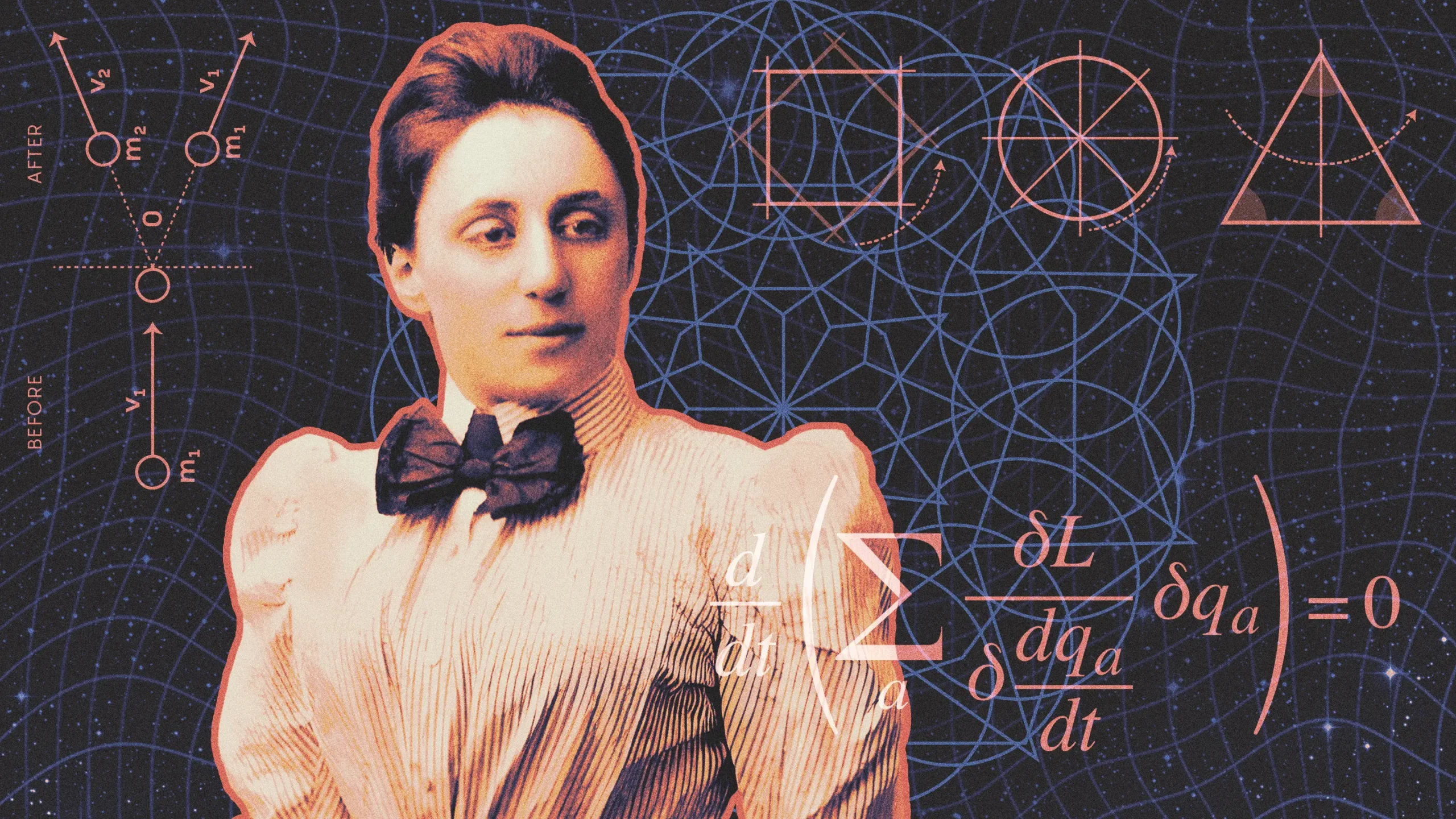
Invited to Göttingen by Hilbert and Felix Klein in 1915 to help resolve an energy conservation paradox in Einstein's general relativity, Noether proved Noether's theorem (1918)—one of the most profound and elegant theorems in modern physics. She proved that every continuous symmetry of a physical system corresponds to a fundamental conservation law (e.g., time symmetry implies conservation of energy; spatial translation implies conservation of momentum). In the 1920s, Noether revolutionized abstract algebra, creating the modern theories of rings, fields, ideals, and ascending chain conditions (Noetherian rings). Dismissed by the Nazi regime in 1933 because she was Jewish, she emigrated to Bryn Mawr College in the United States.
Key Life Milestones
Proof of Noether's Theorem
Proved that every differentiable symmetry of the action of a physical system has a corresponding conservation law.
Ideal Theory in Ring Domains
Published her revolutionary paper founding modern abstract ring theory and introducing Noetherian rings.
Memorial Guestbook & Tributes
0 messages recordedLeave a Respectful Tribute
Final Resting Place
Perpetual MemorialBryn Mawr, Pennsylvania, United States