 China
•
23 views
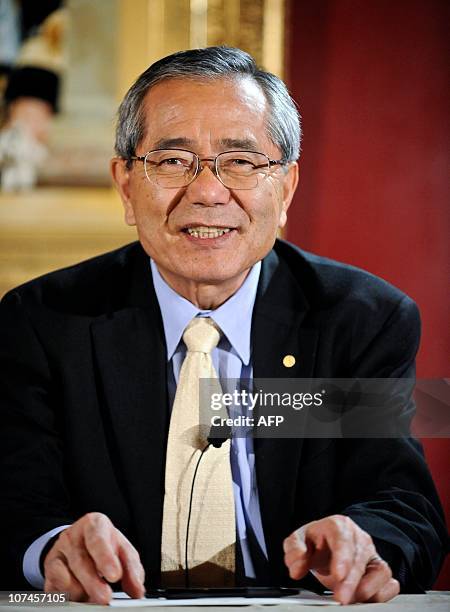
Ei-ichi Negishi

Changchun, China
Archival Overview
Distinguished Japanese chemist and Purdue University professor who was awarded the 2010 Nobel Prize in Chemistry for discovering the Negishi coupling, a palladium-catalyzed reaction enabling the synthesis of complex molecules in medicine and electronics.
Biographical Record
Ei-ichi Negishi was born in Changchun (then Hsinking, Manchukuo) and grew up in postwar Tokyo, graduating from the University of Tokyo in 1958. Coming to the United States on a Fulbright scholarship, he earned his doctorate in organic chemistry from the University of Pennsylvania in 1963. He conducted postdoctoral research at Purdue University under Nobel laureate Herbert C. Brown before joining Syracuse University and returning to Purdue in 1979 as Herbert C. Brown Distinguished Professor.
In 1977, Negishi published his seminal discovery of the palladium-catalyzed cross-coupling of organozinc compounds with organic halides (the Negishi coupling). This chemical method enabled researchers to connect carbon atoms with unprecedented precision and high yields. The reaction transformed synthetic chemistry worldwide, utilized in the manufacture of anti-cancer medications, pain relievers, and thin OLED displays for televisions and smartphones. He shared the 2010 Nobel Prize in Chemistry with Richard F. Heck and Akira Suzuki.
Key Life Milestones
Discovery of the Negishi Coupling
Published the breakthrough organozinc palladium-catalyzed cross-coupling reaction that bears his name.
Nobel Prize in Chemistry
Awarded the Nobel Prize in Chemistry in Stockholm for palladium-catalyzed cross couplings in organic synthesis.
Memorial Guestbook & Tributes
0 messages recordedLeave a Respectful Tribute
Final Resting Place
Perpetual MemorialIndianapolis, Indiana, United States