 United States
•
3,398 views
United States
•
3,398 views
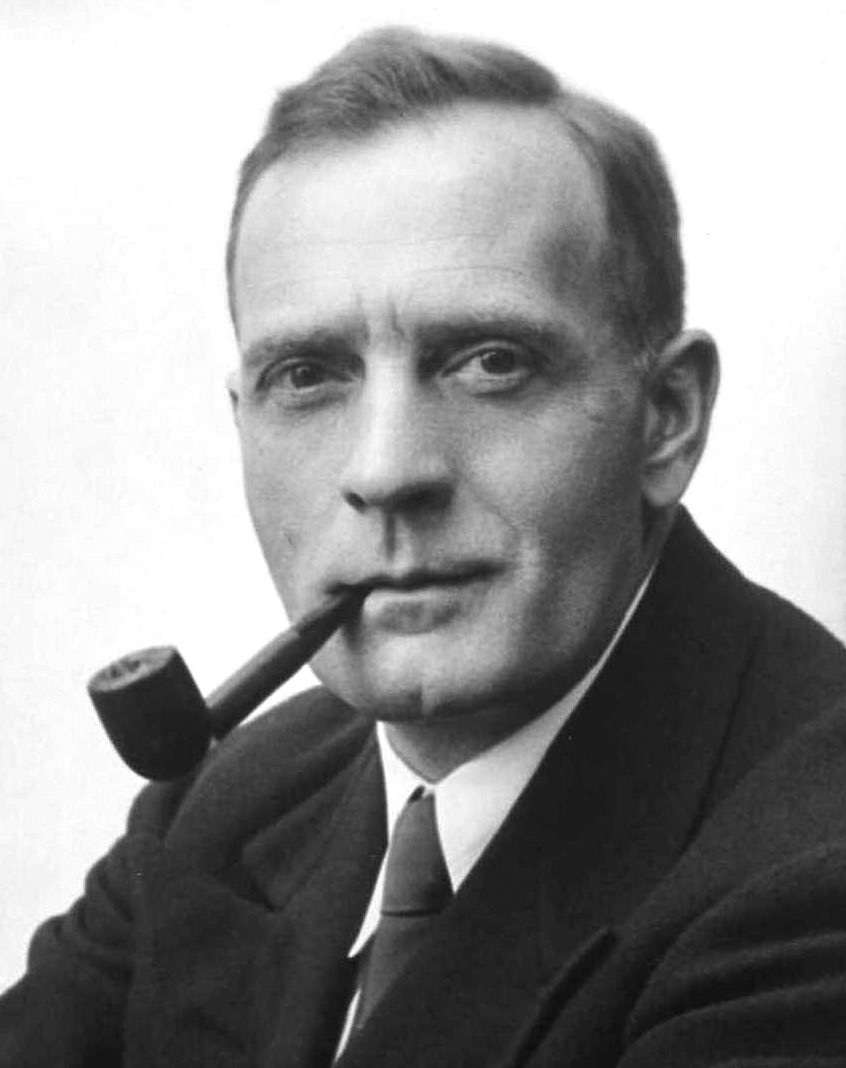
Edwin Hubble

Marshfield, Missouri, United States
Archival Overview
Pioneering observational astronomer who proved galaxies exist beyond the Milky Way and that the universe is expanding.
Biographical Record
Edwin Powell Hubble was an American observational astronomer whose discoveries dramatically expanded humanity's conception of the cosmos. After studying law at Oxford as a Rhodes Scholar, Hubble returned to his passion for astronomy, joining the staff of Mount Wilson Observatory in California, home to the 100-inch Hooker Telescope—then the most powerful on Earth.
In 1923, Hubble identified Cepheid variable stars in the Andromeda Nebula (M31), proving conclusively that Andromeda was not an internal gas cloud of the Milky Way, but an independent 'island universe' millions of light-years away. In 1929, by combining distances with redshift measurements obtained by Vesto Slipher, he formulated Hubble's law, demonstrating that galaxies are receding from us with velocities proportional to their distance. This established that the entire universe is continually expanding, providing the observational foundation for the Big Bang theory. The historic Hubble Space Telescope was named in his honor.
Key Life Milestones
Discovery of Extragalactic Universes
Identified Cepheids in the Andromeda nebula, proving that galaxies exist far beyond our own Milky Way.
Formulation of Hubble's Law
Demonstrated the linear relationship between galactic redshift and distance, proving the expansion of the universe.
Memorial Guestbook & Tributes
0 messages recordedLeave a Respectful Tribute
Final Resting Place
Perpetual MemorialSan Marino, California, United States