 Khedivate of Egypt (British Administration)
•
1,793 views
Khedivate of Egypt (British Administration)
•
1,793 views
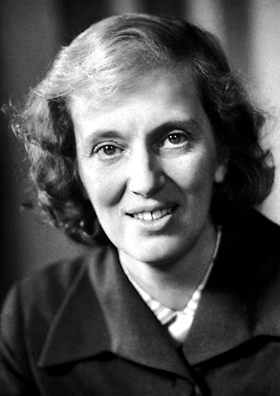
Dorothy Hodgkin

Cairo, Khedivate of Egypt (British Administration)
Archival Overview
British pioneer of X-ray crystallography who determined the atomic structures of penicillin, vitamin B12, and insulin.
Biographical Record
Dorothy Mary Crowfoot Hodgkin was a British chemist whose mastery of X-ray crystallography unlocked the three-dimensional structures of biological molecules that were previously deemed impossibly complex. Despite suffering severe, painful rheumatoid arthritis from age twenty-four that crippled her hands and feet, Hodgkin pursued research at Oxford with relentless tenacity and mathematical genius.
In 1945, Hodgkin resolved the controversial three-dimensional molecular architecture of penicillin, proving that it contains an unexpected four-membered beta-lactam ring and enabling synthetic antibiotics. In 1955, using early digital computers, she solved the intricate structure of vitamin B12, which earned her the 1964 Nobel Prize in Chemistry—making her the first and only British woman to win a Nobel science prize. In 1969, after thirty-five years of painstaking dedication, she solved the structure of the insulin hormone, revolutionizing diabetes treatment. A passionate humanitarian, Hodgkin served as president of the Pugwash Conferences for global peace.
Key Life Milestones
Structure Determination of Penicillin
Solved the three-dimensional atomic crystal structure of penicillin, proving its beta-lactam core architecture.
Nobel Prize in Chemistry
Awarded the Nobel Prize in Chemistry for her determinations by X-ray techniques of the structures of important biochemical substances, notably Vitamin B12.
Memorial Guestbook & Tributes
0 messages recordedLeave a Respectful Tribute
Final Resting Place
Perpetual MemorialIlmington, Warwickshire, United Kingdom