 United States
•
2,664 views
United States
•
2,664 views
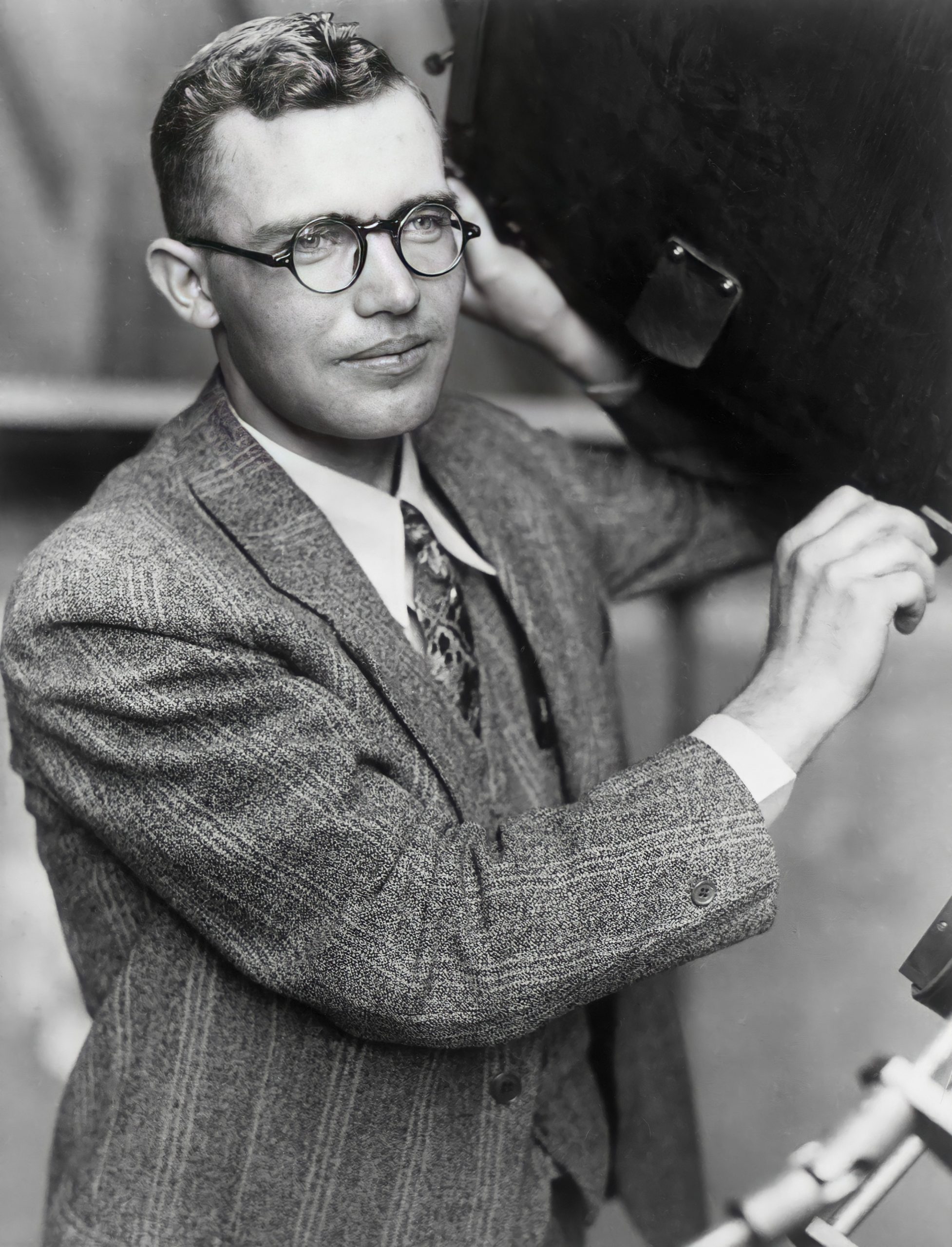
Clyde Tombaugh

Streator, Illinois, United States
Archival Overview
American astronomer who discovered Pluto in 1930 and hundreds of asteroids and variable stars.
Biographical Record
Clyde William Tombaugh was an American astronomer whose gritty self-taught observational skills led to the discovery of the most famous icy world in the outer solar system: Pluto. Raised on a farm in Kansas, Tombaugh constructed his own nine-inch reflecting telescopes in the family pasture using old Buick flywheel gears and hand-ground mirrors, sending detailed observational drawings of Mars and Jupiter to Lowell Observatory in Flagstaff, Arizona.
Impressed by his skill, Lowell Observatory hired the twenty-three-year-old farm boy to continue the search for Percival Lowell's hypothetical 'Planet X'. Using a blink comparator to compare pairs of photographic plates taken days apart, Tombaugh spent hundreds of hours scanning millions of stars. On February 18, 1930, he noticed a tiny, faint point of light shifting position between January plates: he had discovered Pluto. Tombaugh later discovered hundreds of asteroids and variable stars. Following his death, an ounce of his cremated ashes was placed aboard NASA's New Horizons spacecraft, which flew past Pluto in 2015 and is now traveling through interstellar space.
Key Life Milestones
Discovery of Pluto
Identified the ninth planetary body using the Lowell blink comparator, opening exploration of the Kuiper Belt.
Voyage on New Horizons
Part of his cremated ashes launched aboard NASA's New Horizons probe, flying past Pluto in 2015 into deep space.
Memorial Guestbook & Tributes
0 messages recordedLeave a Respectful Tribute
Final Resting Place
Perpetual MemorialKuiper Belt (Space), United States