 French Empire (France)
•
4,770 views
French Empire (France)
•
4,770 views
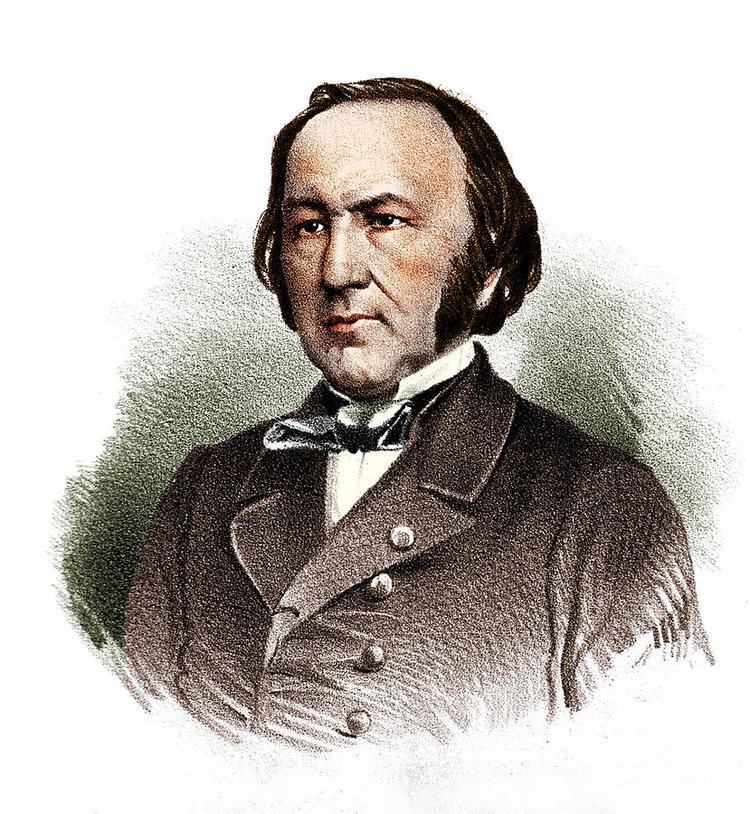
Claude Bernard

Saint-Julien, Rhône, French Empire (France)
Archival Overview
French physiologist regarded as the father of modern experimental physiology who established the concept of homeostasis (milieu intérieur).
Biographical Record
Claude Bernard was a French physiologist and academician whose rigorous application of the scientific method to living organisms transformed physiology from philosophical speculation into a precise laboratory science. An aspiring playwright who moved to Paris with a completed drama before turning to medicine, Bernard worked as laboratory assistant to François Magendie at the Collège de France.
Bernard made a stunning succession of fundamental physiological discoveries: he proved that the pancreas digests fats, isolated glycogen in the liver proving that animal bodies synthesize complex organic molecules from simpler compounds, discovered the vasomotor nerves that dilate and constrict blood vessels, and elucidated curare poison's action on neuromuscular junctions. His crowning theoretical achievement was the concept of the milieu intérieur (internal environment)—the stable physical-chemical state maintained inside organisms despite external fluctuations—which Walter Cannon later formalized as homeostasis. In 1865, Bernard published An Introduction to the Study of Experimental Medicine, one of the greatest guides to scientific research ever written.
Key Life Milestones
Discovery of Glycogen and Liver Glycogenesis
Discovered glycogen in the liver and demonstrated that the animal body can internally synthesize carbohydrates.
An Introduction to Experimental Medicine
Published the seminal philosophical and practical treatise on experimental biological methodology and the milieu intérieur.
Memorial Guestbook & Tributes
0 messages recordedLeave a Respectful Tribute
Final Resting Place
Perpetual MemorialParis, France