 United Kingdom
•
8 views
United Kingdom
•
8 views
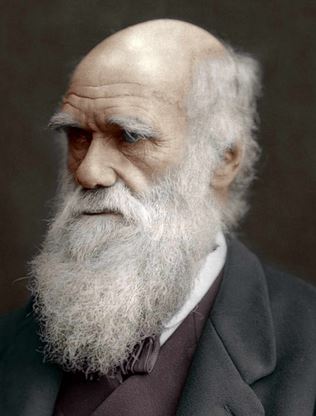
Charles Darwin

The Mount (Shrewsbury, Shropshire), United Kingdom
Archival Overview
Naturalist whose 1859 masterpiece On the Origin of Species established the theory of biological evolution by natural selection, unifying all life on Earth under common descent.
Biographical Record
Charles Robert Darwin (1809–1882) sailed as unpaid naturalist aboard HMS Beagle on a five-year voyage around the globe (1831–1836). Observing mockingbirds, giant tortoises, and finches in the Galápagos Islands, alongside marine fossils elevated in the Andes, Darwin began formulating his radical theory of life.
Working in quiet seclusion at Down House in Kent, he spent twenty years gathering evidence from botany, animal breeding, and embryology before co-presenting with Alfred Russel Wallace in 1858. In November 1859, he published On the Origin of Species by Means of Natural Selection, demonstrating that all living species evolved from common ancestors through survival advantages in changing environments.
Key Life Milestones
Galápagos Islands Biological Survey
Observed island-specific variations in finches and tortoises that catalyzed his theory of evolutionary divergence.
Publication of 'On the Origin of Species'
Published his epochal book proposing evolution by natural selection, revolutionizing modern biology and philosophy.
Memorial Guestbook & Tributes
0 messages recordedLeave a Respectful Tribute
Final Resting Place
Perpetual MemorialLondon, United Kingdom