 United Kingdom
•
8 views
United Kingdom
•
8 views
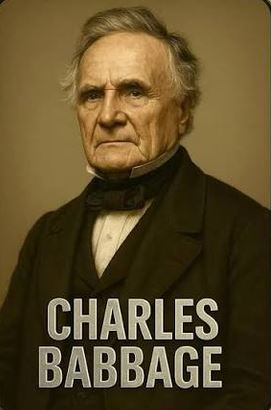
Charles Babbage

London, United Kingdom
Archival Overview
English mathematician and mechanical engineer who designed the Difference Engine and the Analytical Engine, originating the fundamental architecture of modern programmable digital computers.
Biographical Record
Charles Babbage (1791–1871) was Lucasian Professor of Mathematics at Cambridge. Frustrated by errors in hand-computed nautical and mathematical tables, he resolved to compute mechanically. In 1822, he designed the Difference Engine to calculate polynomial tables automatically using finite differences.
In 1837, Babbage conceived the Analytical Engine: the world's first general-purpose programmable computer design. It incorporated a 'Store' (memory), a 'Mill' (CPU/ALU), punched card input, sequential execution, and conditional branching. Though Victorian engineering could not fully manufacture it, his blueprints anticipated modern computer architecture by a century.
Key Life Milestones
Conception of the Difference Engine
Presented his paper to the Royal Astronomical Society proposing mechanical computation of polynomial tables.
Design of the Analytical Engine
Completed the foundational blueprints for the world's first general-purpose, punch-card-programmable computer.
Memorial Guestbook & Tributes
0 messages recordedLeave a Respectful Tribute
Final Resting Place
Perpetual MemorialMarylebone (London), United Kingdom