 Kingdom of Prussia (Poland)
•
2 views
Kingdom of Prussia (Poland)
•
2 views
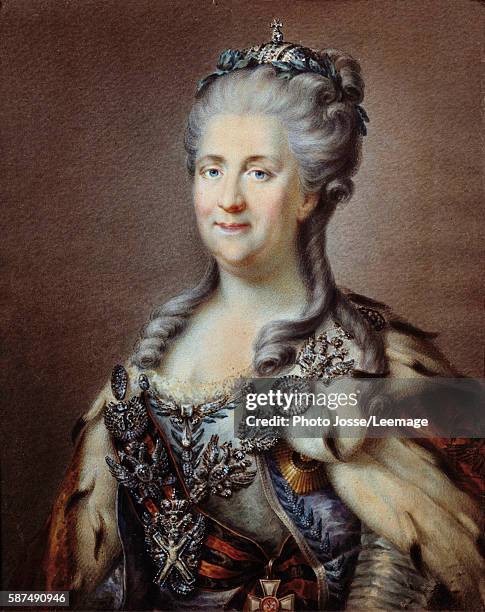
Catherine II of Russia (Catherine the Great)

Stettin, Pomerania, Kingdom of Prussia (Poland)
Archival Overview
Longest-reigning female leader of Russia whose thirty-four-year golden age modernized the Russian Empire and annexed Crimea.
Biographical Record
Catherine II, celebrated as Catherine the Great, was the longest-reigning empress of Russia (1762–1796), presiding over the golden age of the Russian Empire. Born an obscure German princess named Sophie of Anhalt-Zerbst, she converted to Russian Orthodoxy to marry Grand Duke Peter (Peter III). In 1762, supported by the Imperial Guard led by Grigory Orlov, she ousted her erratic husband in a bloodless coup and seized the imperial throne.
An ardent champion of the European Enlightenment, Catherine maintained personal correspondence with Voltaire and Diderot, assembled the magnificent art collection that founded the Hermitage Museum in Saint Petersburg, and wrote her Nakaz (Instruction) on enlightened law. Through victorious Russo-Turkish Wars directed by Prince Grigory Potemkin, Catherine conquered the Black Sea coastline, annexed the Crimean Khanate (1783), founded the naval ports of Sevastopol and Odessa, and absorbed large parts of the Polish-Lithuanian Commonwealth, expanding Russian territory by 200,000 square miles and securing Russia's status as a dominant European great power.
Key Life Milestones
The Legislative Commission and the Nakaz
Annexation of Crimea and Foundation of the Black Sea Fleet
Memorial Guestbook & Tributes
0 messages recordedLeave a Respectful Tribute
Final Resting Place
Perpetual MemorialSaint Petersburg, Russia