 Germany
•
8 views
Germany
•
8 views
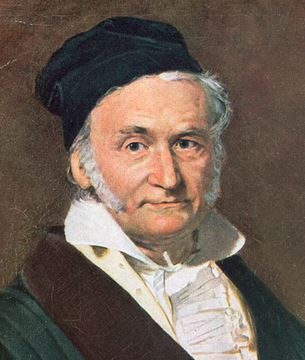
Carl Friedrich Gauss

Braunschweig, Germany
Archival Overview
German mathematical and physical colossus who founded modern number theory, proved the Fundamental Theorem of Algebra, discovered the normal distribution, and formulated Gauss's Law in electromagnetism.
Biographical Record
Johann Carl Friedrich Gauss (1777–1855) was a child prodigy whose genius earned him the title Princeps mathematicorum. In 1801, at age 24, he published Disquisitiones Arithmeticae, which founded modern number theory and introduced modular congruence arithmetic. He proved the Fundamental Theorem of Algebra and developed the method of least squares to predict the orbit of the dwarf planet Ceres.
Gauss served as director of the Göttingen Observatory, invented the heliotrope for geodesic surveys, and discovered the Gaussian normal distribution. Collaborating with Wilhelm Weber, he built an early electromagnetic telegraph and formulated Gauss's Law for electrostatic and magnetic fields, a cornerstone of Maxwell's equations.
Key Life Milestones
Publication of Disquisitiones Arithmeticae
Published the definitive treatise founding modern number theory, introducing congruence notation and cyclotomy.
Mathematical Recovery of Ceres
Applied his least-squares orbit algorithm to locate the lost dwarf planet Ceres with exact precision.
Memorial Guestbook & Tributes
0 messages recordedLeave a Respectful Tribute
Final Resting Place
Perpetual MemorialGöttingen, Germany