 France
•
9 views
France
•
9 views
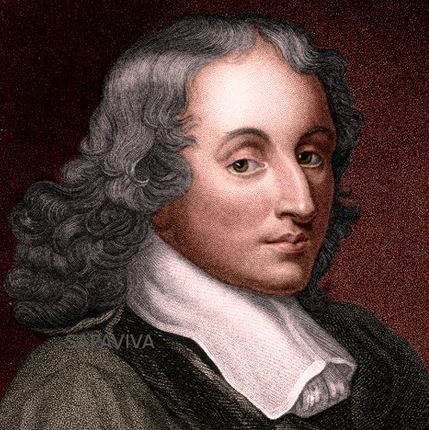
Blaise Pascal

Clermont-Ferrand (Auvergne), France
Archival Overview
French child prodigy who invented the mechanical calculator (Pascaline), founded probability theory with Fermat, and proved that atmospheric pressure decreases with altitude.
Biographical Record
Blaise Pascal (1623–1662) demonstrated astonishing genius from childhood, proving Girard Desargues' theorem on conic sections at age sixteen. To help his father, a royal tax commissioner, Pascal spent three years inventing and building the Pascaline in 1642—the world's first commercial mechanical calculating machine.
In fluid dynamics, his barometric experiments atop the Puy-de-Dôme volcano proved that atmospheric pressure diminishes with altitude and that vacuums exist in nature (formulating Pascal's Law of hydraulic pressure). In 1654, his historic correspondence with Pierre de Fermat on gambling problems laid the mathematical foundations of probability theory.
Key Life Milestones
Invention of the Pascaline Calculator
Engineered the first mechanical adding and subtracting machine with carrying wheels.
The Puy-de-Dôme Atmospheric Pressure Experiment
Proved with mercury barometers that air has weight and that atmospheric pressure decreases at mountain heights.
Memorial Guestbook & Tributes
0 messages recordedLeave a Respectful Tribute
Final Resting Place
Perpetual MemorialParis, France