 Germany
•
9 views
Germany
•
9 views
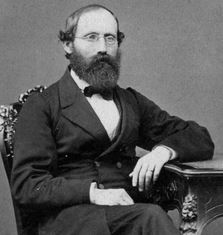
Bernhard Riemann

Breselenz (Hanover), Germany
Archival Overview
Visionary German mathematician whose non-Euclidean differential geometry provided the geometric language for Einstein's general relativity, and whose Riemann Hypothesis remains mathematics' greatest open problem.
Biographical Record
Georg Friedrich Bernhard Riemann (1826–1866) studied under Gauss and Dirichlet at Göttingen. In his 1854 habilitation lecture, 'On the Hypotheses Which Lie at the Bases of Geometry', Riemann created Riemannian geometry, generalizing geometry to multidimensional curved manifolds governed by metric tensors. Six decades later, Albert Einstein utilized Riemannian geometry to formulate general relativity.
In complex analysis, Riemann introduced Riemann surfaces and the Riemann mapping theorem. In his 1859 number theory paper, he investigated the analytic continuation of the zeta function and proposed the Riemann Hypothesis regarding its non-trivial zeros, which remains the most famous unsolved conjecture in mathematics.
Key Life Milestones
Habilitation on Non-Euclidean Geometry
Delivered the historic lecture introducing Riemannian metric manifolds, founding modern differential geometry.
Formulation of the Riemann Hypothesis
Published 'On the Number of Primes Less Than a Given Magnitude', formulating the Riemann zeta hypothesis.
Memorial Guestbook & Tributes
0 messages recordedLeave a Respectful Tribute
Final Resting Place
Perpetual MemorialSelasca (Verbania, Lake Maggiore), Italy