 German Empire
•
3 views
German Empire
•
3 views
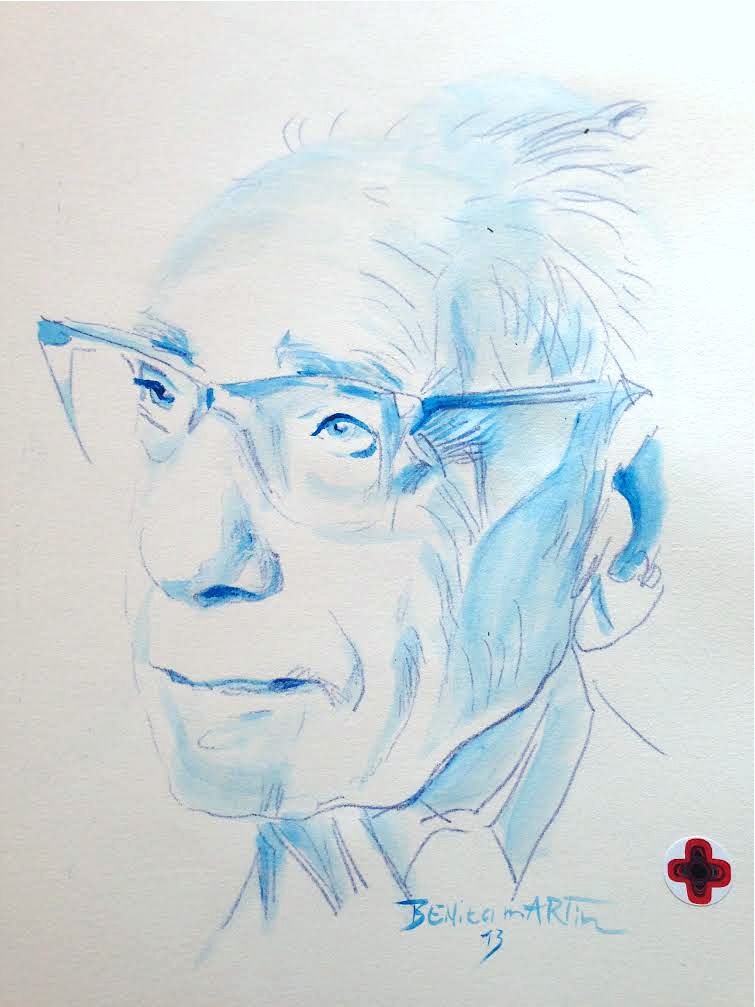
Bernard Katz

Leipzig, German Empire
Archival Overview
German-born British biophysicist who was awarded the 1970 Nobel Prize in Medicine for discovering that neurotransmitters are released at synapses in discrete packets or 'quanta' via calcium-mediated synaptic vesicles.
Biographical Record
Bernard Katz (1911–2003) fled Nazi Germany in 1935 as a young Jewish physician, joining A.V. Hill's biophysics laboratory at University College London. During World War II, he served as a radar officer with the Royal Australian Air Force in the Pacific theater.
Returning to UCL, Katz recorded tiny spontaneous electrical fluctuations at the frog neuromuscular junction, which he named 'miniature end-plate potentials'. In a series of brilliant papers with Paul Fatt, Katz proved that acetylcholine is stored in intracellular synaptic vesicles and discharged in all-or-none multimolecular packets ('quanta') triggered by calcium ion influx, unveiling the atomic architecture of chemical synapses.
Key Life Milestones
Discovery of Quantal Release of Neurotransmitters
Demonstrated that chemical synaptic transmission occurs via the exocytosis of discrete multi-molecular packets.
Awarded the Nobel Prize in Medicine
Shared the Nobel Prize with Julius Axelrod and Ulf von Euler for discoveries concerning neurotransmitter storage and release.
Memorial Guestbook & Tributes
0 messages recordedLeave a Respectful Tribute
Final Resting Place
Perpetual MemorialLondon, United Kingdom