 United States
•
11 views
United States
•
11 views
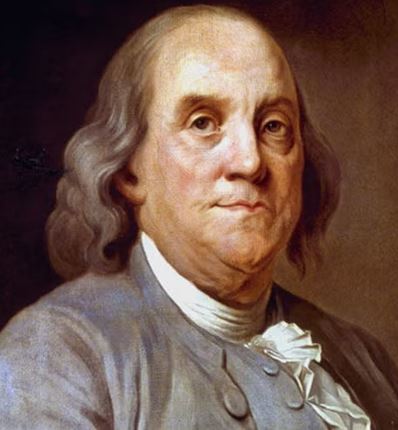
Benjamin Franklin

Boston (Massachusetts Bay), United States
Archival Overview
Founding Father and polymath who proved that lightning is electrical through his famous kite experiment, formulated the conservation of electric charge, and invented the lightning rod and bifocal glasses.
Biographical Record
Benjamin Franklin (1706–1790), printer, statesman, and philosopher in Philadelphia, conducted pioneering electrical research in the 1740s that earned him international scientific fame, with the Royal Society awarding him the Copley Medal in 1753. He coined the terms 'battery', 'charge', 'conductor', 'positive', and 'negative'.
In June 1752, Franklin flew a silk kite into a Philadelphia thunderstorm with a brass key attached to a silk ribbon, storing electricity in a Leyden jar and proving that celestial lightning is identical to laboratory static electricity. He invented the lightning rod to protect human buildings from fire, refused to patent his inventions (including the Franklin stove and bifocal lenses), and helped draft the Declaration of Independence and US Constitution.
Key Life Milestones
The Famous Kite Experiment and Lightning Rod
Proved the electrical nature of lightning with his kite and key experiment, inventing the protective lightning rod.
Publication of 'Experiments and Observations on Electricity'
Introduced single-fluid electrical theory and the foundational terms positive and negative charge.
Memorial Guestbook & Tributes
0 messages recordedLeave a Respectful Tribute
Final Resting Place
Perpetual MemorialPhiladelphia (Pennsylvania), United States