 United States
•
10 views
United States
•
10 views
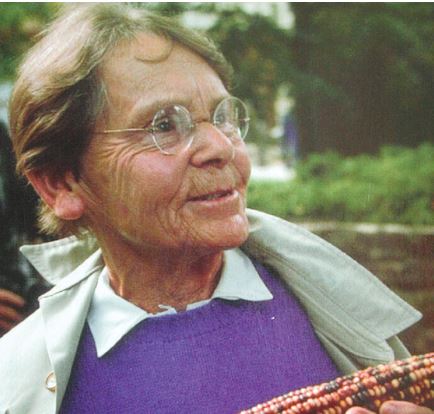
Barbara McClintock

Hartford (Connecticut), United States
Archival Overview
American cytogeneticist whose discovery of mobile genetic elements (transposons or 'jumping genes') proved that genomes are dynamic, mutable systems, winning an unshared Nobel Prize in 1983.
Biographical Record
Barbara McClintock (1902–1992) studied botany and cytology at Cornell University. Working at Cold Spring Harbor Laboratory on maize (corn) cytogenetics, McClintock developed techniques for visualizing chromosomes under the microscope.
During the 1940s and 1950s, through meticulous breeding experiments, McClintock discovered transposable elements (transposons)—segments of DNA that can move to different positions within the genome, switching genes on or off. Challenging the dogma of a static genome, her discovery was vindicated decades later in bacteria, plants, and humans. In 1983, McClintock received an unshared Nobel Prize in Physiology or Medicine.
Key Life Milestones
Discovery of Transposable Elements in Maize
Published 'The Origin and Behavior of Mutable Loci in Maize', revealing mobile genetic elements that regulate gene expression.
Unshared Nobel Prize in Physiology or Medicine
Awarded the unshared Nobel Prize in Physiology or Medicine for her discovery of mobile genetic elements.
Memorial Guestbook & Tributes
0 messages recordedLeave a Respectful Tribute
Final Resting Place
Perpetual MemorialHuntington (New York), United States