 France
•
17 views
France
•
17 views
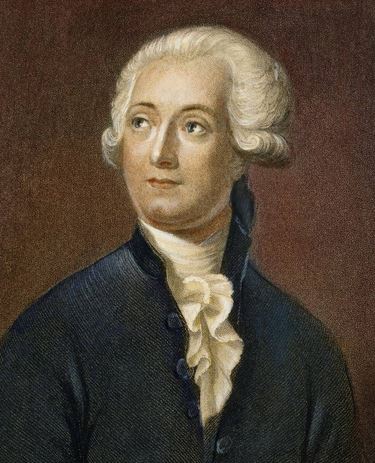
Antoine-Laurent de Lavoisier

Paris, France
Archival Overview
'Father of Modern Chemistry' who discovered the law of conservation of mass, recognized and named oxygen and hydrogen, abolished the phlogiston theory, and standardized chemical nomenclature.
Biographical Record
Antoine-Laurent de Lavoisier (1743–1794), working in his magnificent laboratory at the Paris Arsenal alongside his brilliant wife Marie-Anne Pierrette Paulze, transformed chemistry into a rigorous quantitative science. By sealing chemical reactions in closed vessels and weighing reactants and products on precision balances, he formulated the fundamental law: 'Nothing is lost, nothing is created, everything is transformed' (*Rien ne se perd, rien ne se crée, tout se transforme*).
Lavoisier recognized that combustion and respiration are chemical reactions with a distinct gas that he named oxygen (acid-former), disproving the long-held phlogiston theory. In his 1789 Traité Élémentaire de Chimie, he published the first modern list of chemical elements. Tragically guillotined during the Reign of Terror due to his tax-farming post, mathematician Lagrange lamented: 'It took them only an instant to cut off that head, and a hundred years may not produce another like it.'
Key Life Milestones
Discovery of Oxygen and Demolition of Phlogiston
Proved that combustion requires oxygen, establishing modern chemical oxidation and animal respiration.
Publication of 'Traité Élémentaire de Chimie'
Published the first modern chemistry textbook, defining 33 elements and the law of conservation of mass.
Memorial Guestbook & Tributes
0 messages recordedLeave a Respectful Tribute
Final Resting Place
Perpetual MemorialParis, France