 United Kingdom
•
4 views
United Kingdom
•
4 views
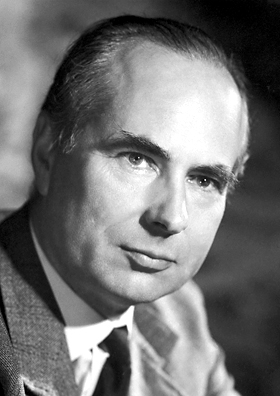
Andrew Huxley

Hampstead (London), United Kingdom
Archival Overview
English biophysicist who won the 1963 Nobel Prize in Medicine for the ionic mechanism of nerve impulses and co-discovered the sliding filament theory of muscle contraction, serving as Master of Trinity College and President of the Royal Society.
Biographical Record
Sir Andrew Fielding Huxley (1917–2012), grandson of 'Darwin's Bulldog' Thomas Henry Huxley and half-brother of novelist Aldous Huxley, possessed an extraordinary mathematical and mechanical mind, personally designing the high-precision micro-manipulators and interference microscopes used in his research.
Alongside Alan Hodgkin, Huxley calculated the numerical integration of the action potential differential equations by hand on a mechanical Brunsviga calculator in 1952. In 1954, using his custom interference microscope, Huxley co-discovered that muscle contraction occurs when actin and myosin filaments slide past each other without shortening, solving the riddle of muscular motion.
Key Life Milestones
Discovery of the Sliding Filament Theory of Muscle Contraction
Demonstrated that striated muscle contracts through the sliding of actin and myosin filaments past each other.
Nobel Prize in Physiology or Medicine
Awarded the Nobel Prize for mathematical and biophysical discoveries of nerve membrane conductances.
Memorial Guestbook & Tributes
0 messages recordedLeave a Respectful Tribute
Final Resting Place
Perpetual MemorialCambridge, United Kingdom