 Kingdom of France
•
4,329 views
Kingdom of France
•
4,329 views
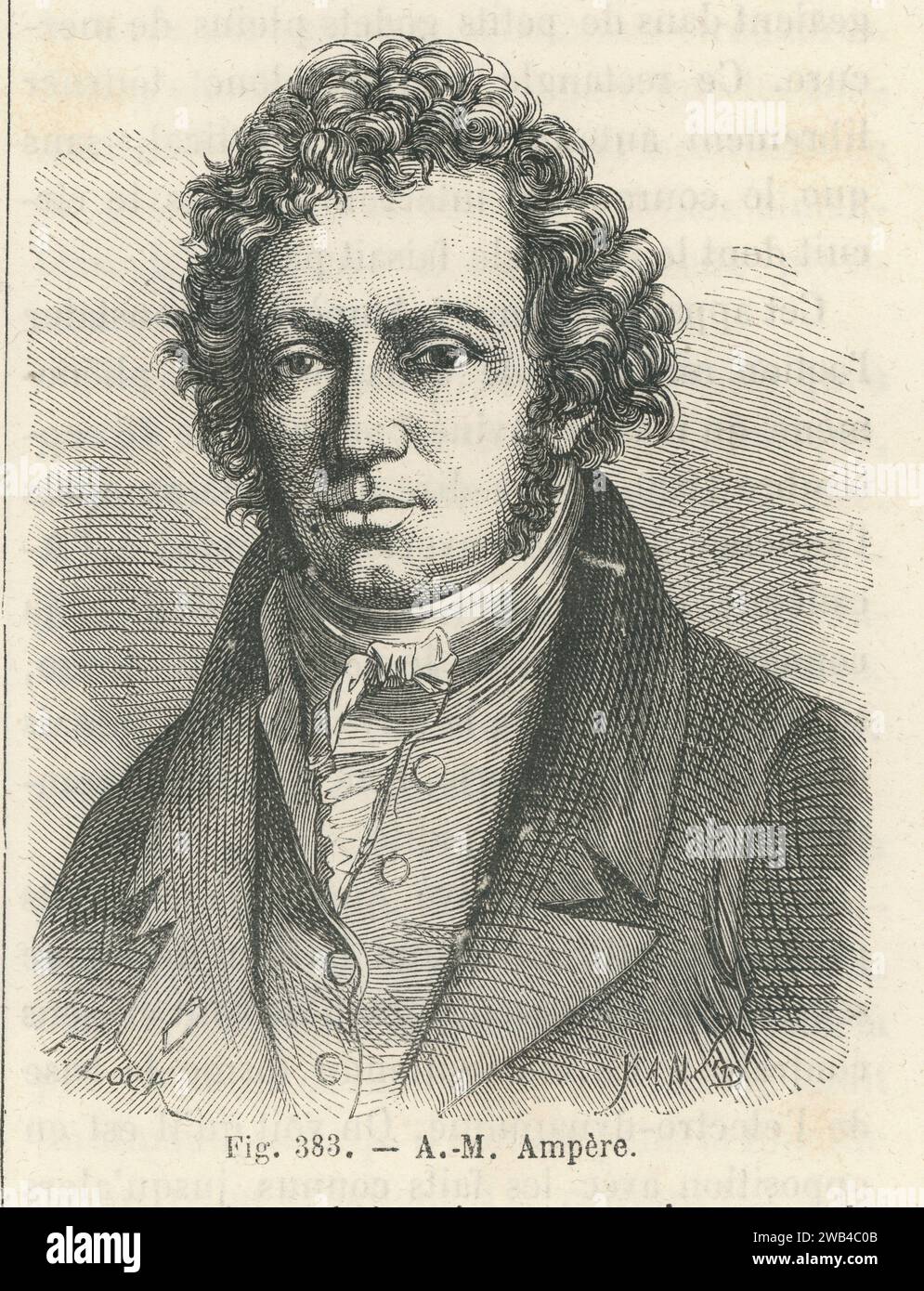
André-Marie Ampère

Lyon, Kingdom of France
Archival Overview
French physicist and mathematician who founded electrodynamics and formulated Ampère's circuital law.
Biographical Record
André-Marie Ampère was a French physicist and mathematician regarded as the father of classical electrodynamics. A prodigy who taught himself advanced calculus in the library of Lyon, his youth was scarred by tragedy when his father was guillotined during the French Revolution's Reign of Terror. Despite profound personal grief, Ampère blossomed into one of the most inventive scientific minds in Europe.
In September 1820, after witnessing François Arago demonstrate Hans Christian Ørsted's discovery that an electric current deflects a magnetic needle, Ampère experienced an explosion of creativity. Within weeks, he proved that two parallel wires carrying electric currents attract each other if currents flow in the same direction and repel if opposite. Formulating Ampère's force law and the circuital law linking magnetic fields to electric currents, he created the brand-new science of 'electrodynamics'. He also coined the term 'galvanometer' and predicted the solenoid. The international unit of electric current, the ampere (A), perpetuates his name.
Key Life Milestones
Discovery of Electrodynamics
Demonstrated that parallel electric currents exert magnetic forces on one another, founding the field of electrodynamics.
Memoir on Mathematical Electrodynamics
Published his grand mathematical synthesis of electrodynamic theory, formulating Ampère's circuital law.
Memorial Guestbook & Tributes
0 messages recordedLeave a Respectful Tribute
Final Resting Place
Perpetual MemorialParis, France