 Kingdom of Sardinia (Italy)
•
1,475 views
Kingdom of Sardinia (Italy)
•
1,475 views
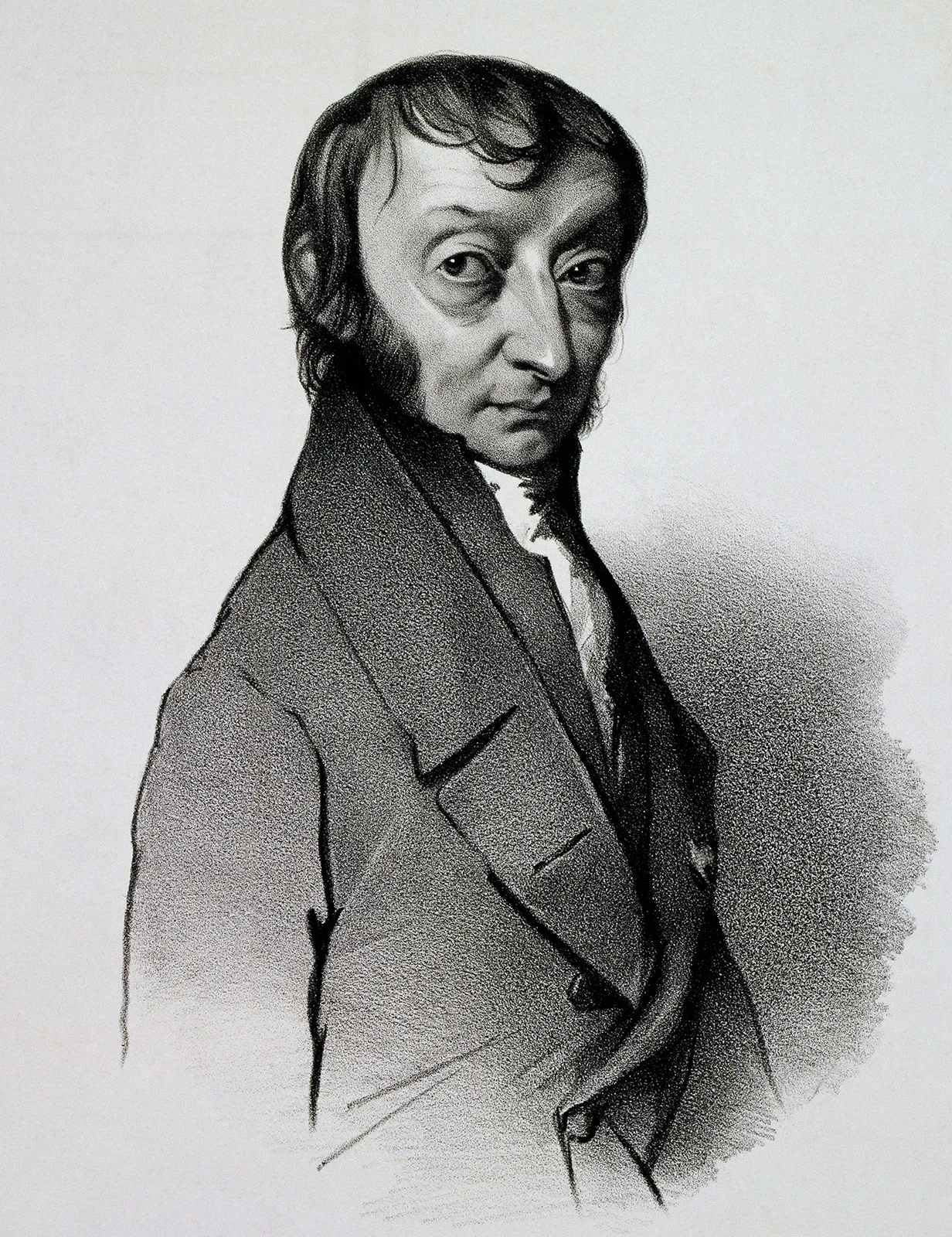
Amedeo Avogadro

Turin, Piedmont, Kingdom of Sardinia (Italy)
Archival Overview
Italian scientist who formulated Avogadro's law, distinguishing between atoms and molecules and giving his name to Avogadro's number.
Biographical Record
Lorenzo Romano Amedeo Carlo Avogadro, Count of Quaregna and Cerreto, was an Italian scientist whose acute physical insights resolved one of the greatest impasses in nineteenth-century chemistry. Originally graduating with a degree in ecclesiastical law and practicing as an advocate, Avogadro turned his keen analytical mind to physics and mathematics, becoming chair of mathematical physics at the University of Turin.
In 1811, seeking to reconcile John Dalton's atomic theory with Joseph Louis Gay-Lussac's law of combining gas volumes, Avogadro published his historic hypothesis: equal volumes of all gases at the same temperature and pressure contain an equal number of molecules (Avogadro's law). Crucially, he clarified that elemental gases like hydrogen and oxygen exist as diatomic molecules (H2, O2) rather than isolated single atoms. Ignored for nearly half a century, his hypothesis was championed by fellow Italian Stanislao Cannizzaro at the 1860 Karlsruhe Congress, creating the universal system of molecular formulas. The number of constituent particles per mole of substance is immortalized as Avogadro's number (6.022 x 10^23).
Key Life Milestones
Avogadro's Law Hypothesis
Published his historic memoir distinguishing between atoms and molecules and stating equal gas volumes contain equal numbers of particles.
Posthumous Vindication at Karlsruhe
Cannizzaro successfully used Avogadro's hypothesis to establish definitive atomic and molecular weights at the first international chemistry congress.
Memorial Guestbook & Tributes
0 messages recordedLeave a Respectful Tribute
Final Resting Place
Perpetual MemorialQuaregna Cerreto, Biella, Italy