 Germany
•
7 views
Germany
•
7 views
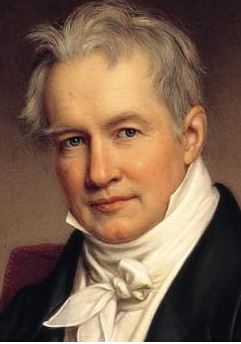
Alexander von Humboldt

Berlin, Germany
Archival Overview
Prussian naturalist and explorer whose epic expedition to the Americas founded modern biogeography, physical geography, and ecology, pioneering the holistic view of Earth's interconnected nature.
Biographical Record
Alexander von Humboldt (1769–1859) revolutionized natural science through systematic empirical measurement and an interconnected ecological perspective. Between 1799 and 1804, Humboldt traveled 9,600 kilometers across the Americas with botanist Aimé Bonpland, scaling volcanic peaks like Mount Chimborazo and mapping the Orinoco and Amazon river systems.
He invented isotherms, discovered geomagnetic intensity changes, and mapped botanical zones across elevation zones in his famous Tableau Physique des Andes, founding biogeography. Humboldt was among the first scientists to warn of human-induced climate change from deforestation. His five-volume treatise Kosmos unified Earth and astronomical sciences into a grand cosmic vision.
Key Life Milestones
Ascent of Mount Chimborazo
Climbed to 19,286 feet on Chimborazo in Ecuador, setting a world altitude record while mapping botanical zones.
Publication of Kosmos
Began publishing his five-volume masterwork Kosmos, synthesizing celestial and terrestrial ecology into a unified science.
Memorial Guestbook & Tributes
0 messages recordedLeave a Respectful Tribute
Final Resting Place
Perpetual MemorialBerlin, Germany