 Great Britain
•
12 views
Great Britain
•
12 views
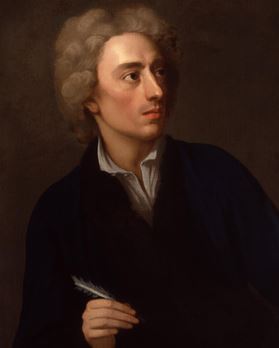
Alexander Pope

London, Great Britain
Archival Overview
Supreme English poet of the Augustan Enlightenment whose glittering heroic couplets, translations of Homer's Iliad, and satirical masterworks—An Essay on Criticism and The Rape of the Lock—made him the second most quoted writer in English after Shakespeare.
Biographical Record
Alexander Pope (1688–1744), afflicted from childhood with Pott's disease (spinal tuberculosis) which stunted his growth at four feet six inches and caused lifelong chronic pain, was barred from attending English universities and holding public office due to his Roman Catholic faith. Undeterred, he educated himself voraciously in classical literature.
With unmatched precision in the heroic couplet (rhymed iambic pentameter), Pope wrote An Essay on Criticism (1711) and the mock-heroic jewel The Rape of the Lock (1712). His translations of Homer's Iliad and Odyssey earned him immense financial independence, enabling him to build his famous villa and subterranean grotto at Twickenham. His verses gave English scores of indelible axioms: 'To err is human, to forgive divine', 'Fools rush in where angels fear to tread', and 'Hope springs eternal in the human breast'.
Key Life Milestones
Publication of An Essay on Criticism
Published his brilliant didactic poem in heroic couplets, establishing the critical canons of the Enlightenment.
Publication of the Verse Translation of Homer's Iliad
Completed his monumental English translation of Homer, securing lifelong literary fame and fortune.
Memorial Guestbook & Tributes
0 messages recordedLeave a Respectful Tribute
Final Resting Place
Perpetual MemorialTwickenham (London), Great Britain