 United Kingdom
•
9 views
United Kingdom
•
9 views
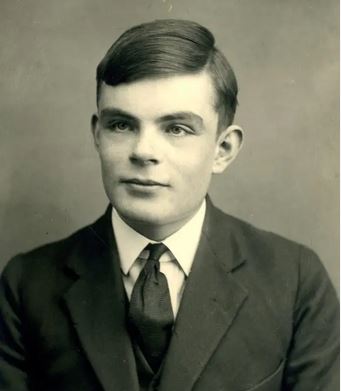
Alan Turing

Maida Vale (London), United Kingdom
Archival Overview
English mathematician and cryptanalyst who conceived the Universal Turing Machine, broke the German Enigma code at Bletchley Park, and proposed the Turing Test for Artificial Intelligence.
Biographical Record
Alan Mathison Turing (1912–1954) was educated at King's College, Cambridge. In 1936, in his landmark paper 'On Computable Numbers', Turing solved Hilbert's Entscheidungsproblem by introducing the theoretical Turing Machine—the mathematical model defining universal algorithmic computation.
During World War II at Bletchley Park's Hut 8, Turing engineered the electromechanical 'Bombe' machine, enabling Allied cryptanalysts to decipher German Enigma military cyphers at industrial scale, saving millions of lives. Postwar, Turing designed the ACE computer, proposed the Turing Test for machine intelligence in 1950, and pioneered morphogenesis in biology. The Turing Award and UK £50 note celebrate his legacy.
Key Life Milestones
Invention of the Universal Turing Machine
Published 'On Computable Numbers', establishing theoretical computer science and solving the Entscheidungsproblem.
Development of the Bletchley Park Bombe
Engineered the electromechanical Bombe decryption machine to break German military Enigma ciphers.
Memorial Guestbook & Tributes
0 messages recordedLeave a Respectful Tribute
Final Resting Place
Perpetual MemorialWilmslow (Cheshire), United Kingdom