 Kingdom of Egypt (Egypt)
•
3,475 views
Kingdom of Egypt (Egypt)
•
3,475 views
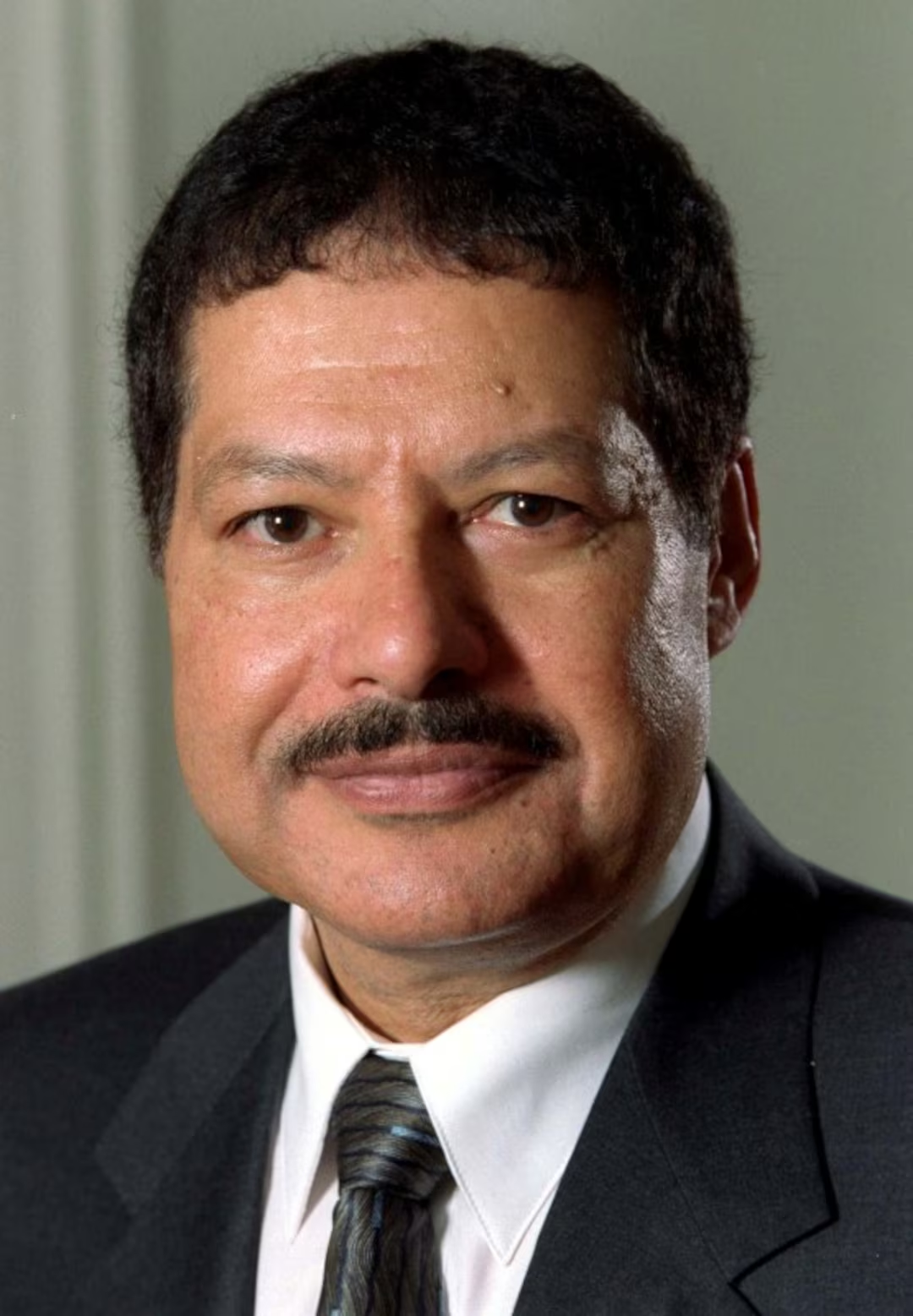
Ahmed Zewail

Damanhur, Kingdom of Egypt (Egypt)
Archival Overview
Egyptian-American chemist revered as the 'father of femtochemistry' who used ultrafast lasers to film chemical bonds breaking and forming in real time.
Biographical Record
Ahmed Hassan Zewail was an Egyptian-American chemist and Nobel laureate celebrated as the father of femtochemistry. Raised in Alexandria where he graduated with first-class honors from the University of Alexandria, Zewail moved to the United States to earn his doctorate at the University of Pennsylvania, subsequently joining the faculty at Caltech in Pasadena, California, where he held the Linus Pauling Chair in Chemistry.
In the late 1980s, Zewail developed ultra-fast laser systems capable of emitting flashes of laser light lasting just tens of femtoseconds (10^-15 seconds). Using these ultrafast flashes like an ultra-high-speed camera strobe, Zewail was able to photograph the exact transition states of chemical reactions as chemical bonds broke and reformed in real time. For creating the field of femtochemistry, Zewail was awarded the 1999 Nobel Prize in Chemistry, becoming the first Arab to receive a science Nobel. He was awarded Egypt's highest civilian honor, the Grand Collar of the Nile, and founded the Zewail City of Science and Technology in Cairo.
Key Life Milestones
Birth of Femtochemistry
Used femtosecond laser pulses to observe the transition state of sodium iodide dissociation in real time, capturing bond breakage.
Nobel Prize in Chemistry
Awarded the Nobel Prize in Chemistry for his studies of the transition states of chemical reactions using femtosecond spectroscopy.
Memorial Guestbook & Tributes
0 messages recordedLeave a Respectful Tribute
Final Resting Place
Perpetual MemorialGiza, Egypt