 United Kingdom
•
9 views
United Kingdom
•
9 views
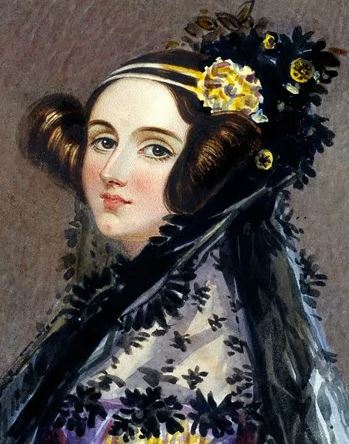
Augusta Ada King, Countess of Lovelace

London, United Kingdom
Archival Overview
English mathematician recognized as the world's first computer programmer, whose visionary annotations on the Analytical Engine foresaw universal symbolic computing beyond numerical calculation.
Biographical Record
Augusta Ada Byron (1815–1852), daughter of Lord Byron and Annabella Milbanke, received elite training in mathematics and science. In 1833, she met Charles Babbage and became deeply enamored with his computing engines. In 1842–1843, Lovelace translated Luigi Menabrea's memoir on the Analytical Engine, adding extensive annotations known as 'Notes'.
Her 'Note G' contained a complete algorithm to compute Bernoulli numbers on the machine—universally acknowledged as the world's first published computer program. Lovelace foresaw that computers could manipulate any symbolic entities (music, graphics, language), stating that the machine 'weaves algebraical patterns just as the Jacquard-loom weaves flowers and leaves.'
Key Life Milestones
Publication of the First Computer Program (Note G)
Published her comprehensive translation and annotations containing the algorithm to compute Bernoulli numbers.
Conception of Universal Symbolic Computation
Articulated that computing engines could manipulate symbols, music, and art, founding computational theory.
Memorial Guestbook & Tributes
0 messages recordedLeave a Respectful Tribute
Final Resting Place
Perpetual MemorialMarylebone (London), United Kingdom